


Leadership Skills You Must Develop
See also: Creative LeadershipLeadership skills are some of the most sought-after qualities in every professional domain. Whether you are at the brink of starting your career or you are an established team leader, strong leadership is a valuable asset that can take your organisation to new heights. However, being a leader in the modern world is not an easy task. Markets move fast, teams are often distributed, and decisions must be made with incomplete information.
Effective leadership has shifted from a model of simple management to one of dynamic adaptation and inspiration. To succeed, modern leaders must possess a sophisticated blend of skills that allow them to keep their teams intact, motivated, and moving forward. This guide will explore the essential qualities you need to develop to become a truly effective leader.
-
Resilience
To become a great leader, you must have resilience. Professionals with strong leadership skills rarely quit. They remain steady under pressure, sustain their energy levels through challenges, and have a mindset focused on coping with and adapting to change. Resilience enables them to bounce back from setbacks, which is a crucial characteristic for any leader. In a world of constant change, things will inevitably go wrong—a project will fail, a key employee will leave, or market conditions will shift unexpectedly. A resilient leader views these moments not as failures, but as learning opportunities. They cultivate the determination to thrive and advance, inspiring their team to do the same.
-
Empathy
Research consistently shows that many employees leave their jobs because they do not feel appreciated or understood by their leaders. This is why empathy plays a huge role in good leadership. Empathy is the ability to emotionally understand the feelings of others. A great leader must be able to put themselves in the position of their employees to understand their perspectives, efforts, and challenges. Workplaces built on a culture of empathy boost the likelihood of employees feeling happy, valued, and engaged in their work. As Mary Barra, CEO of General Motors, has famously advocated, successful business is about winning the hearts and minds of your employees.
-
Strategic Goal-Setting
Leaders are responsible for articulating a clear and compelling vision for the company. They form long-term plans and delegate the task of executing them to their managers. Effective leaders create the future and keep everyone on board by setting clear short-term and long-term goals. Using a framework like SMART goals (Specific, Measurable, Achievable, Relevant, Time-bound) can help you to prioritise tasks and ensure that everyone on the team understands what they are working towards.
In the modern world, this skill is increasingly data-driven. The world runs on data, and leaders excel by using analytics to inform their operational decisions. Leveraging data provides actionable insights that can drive profits and lead to more effective results. Data helps leaders to drive accountability and improve their decision-making, as well as to assess the performance of the company against established targets.
-
Effective Communication
To be a successful leader, you must be able to communicate your thoughts and your vision with absolute clarity. You should be able to explain organisational goals and delegate tasks in a way that is easily understood and inspiring. Research consistently shows that employees feel more motivated when their management keeps them regularly updated on company news and strategy. A key leadership task is to keep the flow of communication steady, using all possible mediums, from company-wide meetings to one-on-one check-ins. It is this commitment to communication that underpins effective team building and conflict resolution.
-
A Commitment to Diversity and Inclusion
A modern leader must be tested on their ability to deliver a connected, inclusive, and diverse employee experience. Creating a workplace that values diversity is not just an ethical imperative; it is a strategic advantage. Diverse teams are more innovative, better at problem-solving, and more representative of a global customer base. Great leaders ensure that their colleagues can operate freely in an unbiased environment where all voices are heard and respected. This involves actively seeking out different perspectives, challenging unconscious biases, and creating clear policies that promote equity and equality.
-
Delegation and the Ability to Motivate
If you keep too much on your plate, you will end up suffering from burnout and reduced productivity. To be a good leader, you must learn the art of delegating responsibilities and tasks effectively. Delegation is not about offloading work; it is a sign of a strong and confident leader who trusts their team. It involves identifying the skills of your employees and assigning tasks that align with their capabilities and provide opportunities for growth.
By delegating effectively, you empower your team, which is a powerful form of intrinsic motivation. This is far more effective than simply offering financial rewards. When your employees feel trusted and have a sense of autonomy, they are more likely to feel a sense of ownership over their work and be motivated to contribute to the organisation's success.
-
Adaptability and a Creative Mindset
A workplace is always susceptible to last-minute plan shifts and changes in working systems. A leader, therefore, must be flexible in the face of challenges. Employees tend to appreciate a leader’s ability to accept change and solve problems creatively. This requires an open mind and a willingness to think outside the box. Choosing the conventional, risk-averse route may feel comfortable, but stepping out of your comfort zone will expand your horizons and help your company to innovate.
This skill also involves a commitment to your own learning. Great leaders are always looking to learn new skills and are open to constructive feedback that can help them to improve their own leadership style. In a world of constant change, a leader's adaptability is key to navigating the future.
Further Reading from Skills You Need
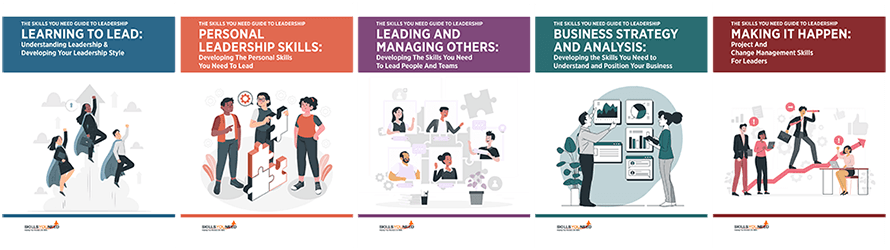
The Skills You Need Guide to Leadership eBooks
Learn more about the skills you need to be an effective leader.
Our eBooks are ideal for new and experienced leaders and are full of easy-to-follow practical information to help you to develop your leadership skills.
Conclusion
Developing good leadership is an ongoing process that requires relentless effort. With novel challenges facing companies worldwide, we are in a new era of leadership. By honing these essential skills—from resilience and empathy to strategic thinking and adaptability—you can excel in your organisation and inspire your team to achieve great things. This is the foundation of modern, effective leadership.
About the Author
Logan is an entrepreneur and writer with a special interest in digital business and presentation skills. When he is not writing online, you can find him designing presentations or running a half marathon.