


The Top Growth Opportunities
Your Leadership Team Must Embrace
See also: Strategic Thinking Skills
The leadership of your organisation fundamentally dictates the company culture, the operational efficiency, and the overall attitude of your workforce. A poor or stagnant approach at the top trickles down rapidly, breeding apathy, low retention rates, and stifled innovation. Conversely, dynamic leadership inspires loyalty and propels an organisation forward even in times of extreme economic volatility.
However, effective leadership is not a static trait; it requires a highly specialised skill set that demands continuous intention and development. Your executive team must consistently strive to improve their management capabilities as your company scales. A failure to grow at the executive level will inevitably create an artificial ceiling for the entire corporation.
Understanding the evolving needs of your workforce and the shifting demands of the global market is a core component of your overarching understanding of leadership. To remain competitive, modern executives must look inward and identify areas where they can refine their approach. Here are the top growth opportunities your leadership team must actively embrace to secure long-term success.

7 Core Growth Opportunities for Executive Leaders
Establishing a Cohesive Vision and Purpose
The modern workforce, particularly younger generations, increasingly prioritises purpose over pure profit. They want to know that their daily efforts are contributing to a meaningful overarching goal. One of the most significant growth opportunities for a leadership team is the ability to clearly define and articulate this vision.
Take the time to figure out exactly who you are as a brand and why you exist beyond generating revenue. Do your operational efforts tie into a broader societal or environmental cause? Whether it is adopting highly sustainable manufacturing practices or partnering with local community charities, your leadership team must integrate this purpose into the company's DNA. When a leadership team successfully models a purpose-driven culture, employee engagement and brand loyalty naturally skyrocket.
Improving Operational Efficiency
As companies grow, they frequently accumulate administrative bloat and inefficient legacy processes. If you run a logistics network, a software development firm, or a traditional office environment, undetected bottlenecks will slow down your output and cost your brand significant capital.
Your leadership team must seize the opportunity to critically audit these workflows. Use data-driven software to track where resources are being allocated and where projects stall. However, do not rely solely on data; as a leader, your job is to speak directly to the people executing the work every day. Ask them how you can remove friction from their roles. Upgrading tools and streamlining processes reduces employee stress, limits costly errors, and dramatically improves your bottom line.
Formalising Internal Training and Mentorship
A common mistake scaling companies make is aggressively hiring external candidates for management roles while overlooking the talent already within their ranks. The employees who have invested time and energy into building your brand from the ground up possess an invaluable, in-depth understanding of your company culture.
Leaders must view internal training as a critical growth opportunity. When you identify promising individuals, invest in their development, and promote them upward, you retain institutional knowledge. While you cannot always promote from within, establishing a formal mentorship programme ensures that institutional wisdom is actively passed down. Match senior executives with junior talent to facilitate knowledge transfer and prepare the next generation to step in during vacations, illnesses, or retirements.
Fostering a Culture of Resilience and Positivity
The global business landscape is inherently volatile, characterised by rapid technological shifts, supply chain disruptions, and fluctuating economic conditions. A leadership team's ability to navigate these challenges without projecting panic onto their staff is a vital growth area.
Your job as an executive is to keep the workforce transparently informed about necessary operational changes while simultaneously projecting confidence that the organisation can weather the storm. Cultivating emotional intelligence and building resilience allows leaders to smile through setbacks and encourage creative problem-solving. Start the day by acknowledging small victories, and train your management team to treat failures as data points for future success rather than opportunities for assigning blame.
Upgrading Communication Infrastructure
The shift towards remote and hybrid work models has permanently altered how teams collaborate. While this flexibility can save companies money on real estate and improve employee satisfaction, it presents a significant challenge to maintaining cohesive daily communication.
Relying exclusively on back-to-back video conferences leads to severe digital fatigue and eats into productive, deep-work hours. Leaders must seize the opportunity to master asynchronous communication. Implementing robust project management boards and third-party chat applications allows staff to log in, see project statuses, and collaborate without the need for constant, synchronous meetings. Reserve live video calls only for complex strategy discussions or highly collaborative tasks.
Refining Strategic Decision-Making
How effectively and accurately your leadership team makes decisions directly dictates how quickly your organisation can scale. Poor, impulsive choices can cost millions, while analysis paralysis can allow competitors to capture your market share. Developing robust decision-making frameworks is a non-negotiable growth opportunity.
Encourage your leaders to dig deeply into complex problems and evaluate the full spectrum of consequences before taking action. What is the worst possible outcome? What is the absolute best? Furthermore, leaders must learn to crowdsource intelligence. Network with other industry executives for external input, consult the frontline workers whose daily routines will be impacted, and survey your client base. Taking a methodical approach to joint decision-making drastically reduces the likelihood of costly strategic errors.
Prioritising Focused Goal Execution
It is incredibly tempting for an ambitious leadership team to try and fix every organisational challenge simultaneously. However, launching a dozen different strategic initiatives at once almost guarantees that none of them will be executed effectively. Spreading resources too thinly leads to corporate burnout and strategic failure.
The most mature leadership teams understand the power of constraint. Choose two or three highly impactful growth objectives for the quarter, and ruthlessly eliminate distractions. Ensure that every member of the leadership team is completely aligned on these core priorities before moving forward. By focusing your collective energy on a limited number of goals, you ensure deep, sustainable execution.
Further Reading from Skills You Need
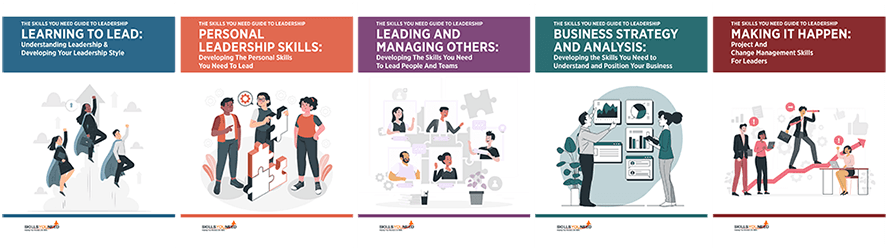
The Skills You Need Guide to Leadership eBooks
Learn more about the skills you need to be an effective leader.
Our eBooks are ideal for new and experienced leaders and are full of easy-to-follow practical information to help you to develop your leadership skills.
Conclusion
The strength of a company is inextricably linked to the strength of its executive team. As the business landscape continues to evolve, leaders cannot rely on outdated management paradigms or the strategies that worked a decade ago. To drive sustainable growth, your leadership team must view their own professional development as a critical corporate objective.
By establishing a cohesive vision, streamlining operations, cultivating resilience, and mastering modern communication frameworks, your leadership team will build an agile, highly motivated workforce. Embrace these core growth opportunities with intention and focus, and you will position your organisation to thrive well into the future.
About the Author
Eleanor Hayes is an organisational psychologist and executive leadership coach who partners with enterprise C-suites to navigate complex structural transitions. With over a decade of experience advising international firms on corporate culture and executive dynamics, she specialises in transforming management bottlenecks into high-performance workflows.