

Why You Should Invest in
Your Employees’ Skills
See also: Coaching Skills
In the modern corporate landscape, human capital is arguably the most valuable asset a business possesses. While thorough induction and onboarding are critical parts of a new hire's assimilation process, education cannot stop once the probationary period ends.
There is a famous management adage that asks: "What happens if we invest in training our employees and they leave? What happens if we don't, and they stay?" The business environment is continuously evolving, driven by rapid technological advancements and shifting market demands. If you want your company to grow, scale, and remain competitive, your workforce must evolve at the exact same pace.
While some businesses rely solely on the skills employees learn organically on the job, a reactive approach to learning is no longer sufficient. You must proactively invest in formal training and development. Here are the top nine strategic reasons why investing in your employees’ skills is critical to long-term business success.

9 Strategic Reasons to Invest in Employee Skills
-
Boosts Employee Morale and Confidence
Competence breeds confidence. Employees who lack confidence in their technical or interpersonal skills are highly prone to episodes of low morale, which inevitably results in underperformance and professional anxiety.
Providing your workforce with targeted opportunities to upgrade their skill sets is an incredible morale booster. Investing in their education signals that you genuinely care about their long-term career trajectory, not just their immediate output. When employees feel competent, they approach complex tasks with enthusiasm rather than dread. They are more likely to take initiative, share ideas, and contribute to a positive workplace culture because they possess the tools necessary to succeed.
-
Identifies Potential Team Leaders
A robust training and development programme acts as a natural filtering system for future leadership. Investing in your staff’s education allows you to easily identify your most ambitious and capable performers.
Future leaders will distinguish themselves by how they engage with upskilling opportunities. They are the individuals who ask probing questions, apply new frameworks immediately, and actively try to motivate others during group workshops. These employees are fully aware of their value and see the trajectory of their careers, rather than just their next paycheque. By tracking who excels in your L&D initiatives, you can confidently build a reliable pipeline for internal succession planning.
-
Improves Employee Engagement and Productivity
A wise business leader never underestimates the financial impact of employee engagement. Stagnation is the enemy of productivity. If an employee performs the exact same tasks day after day with no prospect for intellectual stimulation or professional growth, their motivation will inevitably plummet.
A lack of developmental opportunities leads directly to "quiet quitting" and passive disengagement. Conversely, a dynamic learning environment keeps the mind sharp and the employee engaged. Most professionals want to work in an environment that feels modern, empowering, and forward-thinking. Continuous training disrupts monotony and reignites a sense of professional purpose.
-
Enhances Operational Efficiency and Quality
If an employee requires twice as much time to perform a task because they lack the proper training, your business absorbs that hidden cost every single day. This unnecessary waste of time and resources leads to significant long-term financial losses.
As an immediate operational investment, appropriate training closes the skills gap. It turns your staff into highly efficient, autonomous workers who require less micromanagement. Furthermore, formal education drastically improves the quality of the work produced. Well-trained employees utilise best practices, operate modern software effectively, and deliver a standard of excellence that elevates your entire brand reputation.
-
Significantly Lowers Staff Turnover
Over time, high-performing employees will naturally seek more from their careers—more compensation, greater challenges, and increased responsibility. If they cannot find those opportunities within your organisation, they will look to your competitors.
By providing new skills and demonstrating a vested interest in their professional growth, you foster deep loyalty and significantly reduce turnover. Retaining top talent is vastly more cost-effective than recruiting, interviewing, and onboarding new staff. High turnover damages institutional memory, exhausts remaining staff, and incurs massive recruitment fees. Upskilling allows you to promote a loyal, knowledgeable staff member from within, preserving your company culture and saving capital.
Further Reading from Skills You Need
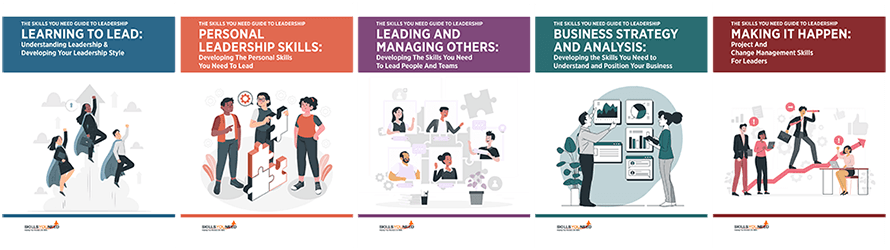
The Skills You Need Guide to Leadership eBooks
Learn more about the skills you need to be an effective leader.
Our eBooks are ideal for new and experienced leaders and are full of easy-to-follow practical information to help you to develop your leadership skills.
-
Reduces Costly Workplace Mistakes
An undertrained or unskilled employee represents a massive operational risk. Whether the mistakes are administrative errors, customer service failures, or severe health and safety violations, they are statistically bound to occur if an employee is operating without proper guidance.
Comprehensive training mitigates these risks. As competence increases, employees become highly aware of compliance requirements, safety protocols, and quality assurance standards. While training requires upfront capital, preventing a single major legal compliance error or a lost enterprise client will pay for the training programme instantly. In the long term, risk mitigation ensures your training budget delivers a phenomenal ROI.
-
Encourages a Big-Picture, Collaborative Mindset
In mid-sized and large organisations, departments often become isolated "silos," leading to communication breakdowns and tribalism. Strategic training initiatives can dismantle these barriers by bringing different teams together in a collaborative learning environment.
For example, if your marketing team is undergoing data analytics training, opening a few seats to the sales or product development teams fosters cross-departmental empathy. Cross-training allows employees to understand the challenges faced by their colleagues. When staff can see the "big picture" of how the entire company operates, they make more holistic decisions and are deeply motivated to achieve overarching organisational goals rather than just departmental KPIs.
-
Keeps Your Business Ahead of Industry Trends
The tools, software, and methodologies of modern business are advancing at breakneck speed. It is fundamentally unrealistic to expect your employees to independently master the latest industry trends while simultaneously managing a full-time workload.
It is equally impossible for you, as a manager, to be the sole expert on every new technological development. By offering technical training and sending key personnel to industry conferences, you ensure your organisation does not fall behind the curve. Exposure to cutting-edge technologies and modern practices often sparks innovation, leading to brilliant new business ideas and streamlined workflows that keep you ahead of your competitors.
-
Ensures Organisational Consistency
Hiring a roster of highly skilled individuals is not enough if they all execute their jobs using completely different methodologies. As a manager, you must establish a uniform baseline of excellence. You need to ensure that every client receives the exact same high-quality experience, regardless of which team member they interact with.
By putting all employees through the same rigorous training programmes, you establish standard operating procedures (SOPs). Consistent training ensures everyone operates according to your specific corporate guidelines. Furthermore, it identifies and corrects any bad habits or incorrect assumptions that experienced employees may have carried over from previous workplaces.
Conclusion
The list of benefits does not end here, but these nine strategic pillars demonstrate why employee development must be viewed as a core business strategy rather than a discretionary HR expense. When you invest in your workforce, you build a resilient, agile, and highly loyal team capable of navigating future market disruptions.
Ultimately, a company is only as strong as the people who run it. Fostering a culture of continuous learning ensures that your employees are fulfilled, your operational output is exceptional, and your business remains highly profitable. Upskilling is the ultimate win-win scenario for both the employer and the employee.
About the Author
Alex Williams is a Senior Learning & Development (L&D) Consultant with over 15 years of experience advising mid-sized enterprises. He specialises in building continuous learning cultures, leadership succession pipelines, and employee retention frameworks. Alex is passionate about proving the financial ROI of human-centric management and corporate upskilling.