

The Best Ways to Improve
Your Critical Thinking Skills
See also: Critical Thinking Skills
Developing the ability to think critically is essential for effectively managing your daily affairs and making informed choices. Whether it involves assessing an argument, examining a situation, or resolving a problem, critical thinking empowers us to examine evidence, evaluate different viewpoints, and arrive at a logical decision. It's important to note that critical thinking is not an inherent ability; it is a learned skill that can be significantly improved through practice and self-reflection.
The ability to think critically is increasingly vital in today's complex and rapidly changing world, where we are bombarded with information from various sources, many of which may be unreliable or biased. In this context, developing strong critical thinking skills is more important than ever. This guide will explore some of the best ways to improve your critical thinking and become a more informed and effective thinker in all areas of your life.

How to Improve Your Critical Thinking Skills
Improving your critical thinking is an active process that requires conscious effort. Here are some of the most effective ways to develop and sharpen this essential skill.
-
Engage in Active Reading and Learning
Reading is a powerful tool for improving critical thinking, but it must be done actively, not passively. Active reading means engaging with the text, questioning its arguments, and forming your own opinions. Developing the ability to read and absorb information efficiently allows you to process more complex ideas and make more informed decisions.
Furthermore, actively engaging with new information enhances your cognitive abilities. People who are effective learners can better process and think critically about complex information. They also tend to have better working memory and executive function, which are essential for problem-solving and decision-making.
-
Question Everything
A core component of critical thinking is adopting a questioning attitude. It is essential not to take information at face value, but to delve deeper and evaluate it critically. This involves asking yourself a series of questions about any information you encounter: Who is the source of this information? What are their potential motives or biases? What evidence do they provide to back up their claims? Is this evidence credible? By consistently asking these questions, you will develop a more comprehensive understanding of any subject and enhance your thinking ability.
Developing strong research skills is a key part of this process. To make informed decisions and arrive at well-reasoned conclusions, it is crucial to know how to find and evaluate different sources of information, especially on complex or controversial topics.
-
Analyse Arguments
Another excellent way to improve your critical thinking skills is to practise analysing arguments. When presented with an argument, break it down into its core components. Identify the main claim or conclusion, and then identify the supporting reasons or evidence provided. Look for logical fallacies—common errors in reasoning, such as personal attacks (ad hominem) or appeals to emotion—that weaken an argument. Actively consider alternative viewpoints and potential counterarguments. This practice will not only help you to spot weaknesses in others' arguments but will also help you to develop stronger, more logical arguments of your own.
Practise Self-Reflection
A crucial but often overlooked method for enhancing your critical thinking abilities is self-reflection. It is important to regularly reflect on your own thought processes and decision-making methods. This involves consciously evaluating your own biases, assumptions, and preconceptions. After making a decision, take the time to consider its outcome. What could you have done differently? What did you learn from the experience? By doing so, you can gain greater awareness of your own thinking patterns and improve your decision-making skills. Regular self-reflection helps you develop a more objective and analytical mindset, which is the foundation of good critical thinking.
-
Seek Out Different Perspectives
When we are surrounded by people who hold similar beliefs to our own, it is easy to become trapped in an "echo chamber" where our assumptions are never challenged. To sharpen your critical thinking abilities, you must actively seek out alternative viewpoints. Engage in conversations with people from different backgrounds and with different life experiences. Pay attention to their perspectives and analyse their points of contention.
This does not mean you have to agree with them, but by making a genuine effort to understand *why* they believe what they do, you will develop a deeper and more nuanced view of the world. This practice helps you to see the flaws in your own arguments and to strengthen your beliefs with better evidence and reasoning.
-
Learn to Ask Good Questions
Asking good questions is an essential part of critical thinking. Learn to ask open-ended questions that encourage discussion, exploration, and deeper thought. Avoid closed-ended questions that can be answered with a simple "yes" or "no." Good questions help to clarify your own thinking and to challenge the thinking of others in a constructive way.
This skill is closely tied to being an active listener. Active listening involves focusing fully on what the speaker is saying without interrupting or making assumptions. To become a better listener, practise summarising what the speaker has said to confirm your understanding, and ask clarifying questions to identify any underlying assumptions or biases they may have.

The Importance of Critical Thinking
The ability to critically analyse, assess, and comprehend information is crucial. Critical thinking is vital in many facets of life for several key reasons.
-
Making Informed and Reasoned Decisions
Making well-informed decisions, whether in your personal or professional life, requires critical thinking. By questioning assumptions, evaluating evidence, and dissecting arguments, you can more fully comprehend the benefits and drawbacks of different options and make wiser choices. Critical thinking is particularly important in today's information-rich world, where we are constantly bombarded with information from various sources. This skill allows you to sift through this information and arrive at well-informed decisions based on evidence and reason, rather than on emotion or misinformation.
-
Identifying and Solving Problems
Problem-solving also requires the use of critical thinking. By dissecting complex situations into their component parts and looking at them from multiple perspectives, you can more easily find the root causes of problems and develop more effective solutions. This ability is instrumental in fields like science, engineering, and business, where issues are frequently complex and call for original thinking. Through critical thinking, you can create innovative and valuable solutions to help you achieve your goals.
-
Communicating and Collaborating with Others
Effective communication and teamwork are crucial in many aspects of life. Critical thinking empowers you to work with others and communicate your ideas more effectively by enabling you to clarify your perspectives and participate in fruitful, evidence-based discussions. By evaluating evidence and arguments logically, you can also engage in more informed and constructive discussions with those who hold different perspectives, leading to more productive and successful collaborations.
-
Navigating the Complexities of Modern Life
Critical thinking is becoming increasingly crucial in today's world, which is changing quickly and presents people with new and complex challenges. By being able to effectively assess, evaluate, and filter information, you can better navigate the complexities of modern life and make decisions that will benefit both yourself and your community. People who are more adaptable and open to new ideas and viewpoints are better able to succeed in a wide variety of contexts and scenarios.
Further Reading from Skills You Need
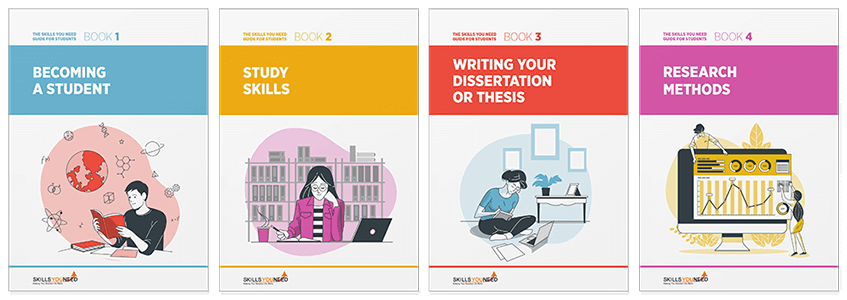
The Skills You Need Guide for Students

Develop the skills you need to make the most of your time as a student.
Our eBooks are ideal for students at all stages of education, school, college and university. They are full of easy-to-follow practical information that will help you to learn more effectively and get better grades.
Conclusion
As the world undergoes constant transformations, it becomes increasingly important to possess the skills to analyse situations critically and adjust accordingly. By improving our capacity for critical thinking, we can become more self-assured, knowledgeable, and empowered individuals who can successfully navigate the intricacies of the modern world. Therefore, we must consistently push ourselves to question our assumptions, think critically, and make informed decisions based on evidence and logical reasoning.
About the Author
Meet Sarah Johnson, a professional self-development coach. She has been helping people improve and achieve their life goals for 10 years. She shares her expertise through webinars and blogs. When she's not busy, Sarah enjoys hiking, exploring new cities, and spending time with her two cats.