


7 Smart Ideas to Sharpen Your
Home Décor Skills
See also: Creative Thinking Techniques
Many of us dream of sprucing up our own personal space, meticulously curating a home that reflects our personality while incorporating the latest interior trends. However, when the time actually comes to select paint swatches, arrange furniture, and commit to a distinct style, we can easily become overwhelmed and deeply confused by the sheer volume of choices.
Are you currently renovating your space or simply planning to refresh the decor in your home by yourself? If so, worry not. While professional interior designers spend years studying spatial awareness and color theory, there are highly practical ways to actively sharpen your own home decor skills and bring out the absolute best in your living environment.
Mastering home decor requires patience, determination, and a willingness to make mistakes. Just learning the fundamental principles of good design is not enough; you must also learn how to practically apply them to create a cohesive, functional, and beautiful aesthetic. In this comprehensive guide, let us deeply explore seven smart tips to hone your interior decorating skills and elevate your living space.
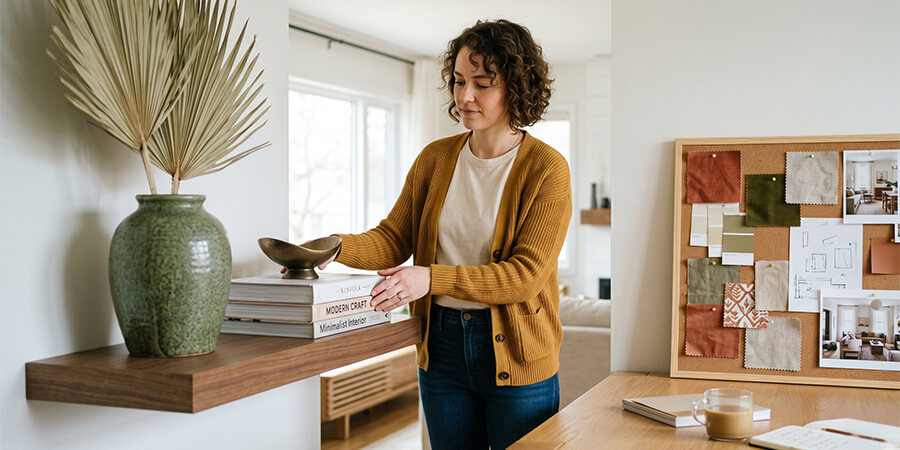
7 Ways to Improve Your Home Decor Skills
-
Embrace Your Personal Style First
Your home should always be designed fundamentally around your unique tastes, rather than blindly following fleeting social media trends. The overarching aesthetics must meet your daily standards and lifestyle preferences. If you naturally favor bright, eclectic colors, lean into a maximalist approach. If sleek minimalism is your preference, focus strictly on monochromatic palettes and clean architectural lines.
Furthermore, do not forget that the outside of your home is the very first impression guests will receive. Well-maintained exteriors set the aesthetic tone before anyone even crosses the threshold. For example, upgrading to high-quality Manitoba replacement windows and doors creates excellent external appeal for a building, improves energy efficiency, and provides enhanced security. Ultimately, your interior and exterior designs speak on your behalf, proudly demonstrating your personality, taste, and elegance.
-
Set Creative Micro-Challenges
Human beings naturally prove themselves every time life throws a challenge their way to test their limits. A highly practical way to stimulate your inner artist is to set specific, bounded decor challenges for yourself over the course of a week or a month. This structured approach will inevitably force you to get creative and improve your styling skills in a way you never thought was possible.
Instead of trying to redesign an entire house at once, which leads to decision fatigue, challenge yourself to restyle a single focal point. Spend one week perfecting the layout of your coffee table books, or dedicate a weekend to creating a visually balanced gallery wall. Read architectural magazines, study design journals to get fresh inspiration, and bring those micro-ideas to life one small vignette at a time.
-
Experiment Boldly with Color and Art
While established design trends are often proven and excellent starting points, relying solely on them severely limits your capacity to think beyond the safe, predetermined standards. Conversely, fearlessly experimenting with new ideas, textures, and palettes will open entirely new creative horizons. If you are a dedicated individual who strives to radically improve their decorating skills, you must start actively experimenting with color theory.
Trust your intuition and learn the classic 60-30-10 color rule to guide your room's palette. You will quickly discover how to balance eye-catching patterns and incorporate striking DIY elements into your decoration. A phenomenal trick is to take cues from expressive artwork; statement pieces like floral paintings for sale can serve as the brilliant anchor for an entire room, directly inspiring both your primary color choices and the overall emotional mood within a space.
-
Master the Fundamental Basics
Underlying knowledge is absolutely necessary to build up any specialized skill. Before you buy expensive furniture, take the time to learn about natural materials, the spirit of quality workmanship, design paradigms, spatial proportion, visual balance, and the timeless basics of aesthetics. The most common mistake amateur decorators make is overcrowding a room; you must actively minimize clutter and focus strictly on highlighting the most essential, beautiful elements.
There are subtle, universal tips that you can apply regardless of what kind of home decor style you are utilizing. Remember, excellent home decor always beautifully balances both physical function and visual form. Keep spatial balance and human traffic flow in mind when you are planning your furniture layouts. By adhering to the basics, you ensure a room feels comfortable and intentional without overdoing any single part.
-
Leverage Digital Technology and AR Apps
Do not shy away from using modern digital tools, visual search engines, or decor marketplace applications to dramatically level up your game. Today, there are hundreds of highly sophisticated applications that you can download for free to browse for genuinely high-quality spatial ideas. If manually flipping through heavy print magazines is not your preference, these algorithmic apps will be of immense help.
Many major retail and design apps now feature Augmented Reality (AR) options that allow you to digitally place a piece of furniture in your actual room using your smartphone camera. This lets you safely apply your design skills through virtual reality and see exactly how the scale and color turn out before spending a dime. Occasionally browsing detailed YouTube tutorials or structured online courses will also add to your creative arsenal. The key is to learn, practice, and repeat: it is the only guaranteed way to improve your spatial eye.
-
Curate High-Quality Resources and Lookbooks
If you consider yourself to be a complete beginner, rest assured that there is an ocean of expert knowledge readily available. Soaking up highly relevant architectural information and actively applying it to your own decor will keep your spaces feeling fresh and sophisticated. Scour the internet for digital lookbooks and see which specific spatial tricks you can replicate.
You will find some stellar, highly curated ideas simply by studying how high-end home furnishings brands style their own product pages. Take note of how professional stylists layer different textures, group odd numbers of objects, and utilize soft, ambient lighting rather than harsh overhead fixtures. Of course, you should always improvise on those corporate ideas to suit the realities and physical constraints of your own home space.
-
Join and Engage with Online Communities
In the digital age, there are vibrant online communities and hyper-niche groups for almost any specific design aesthetic you can possibly think of—from mid-century modern to bohemian chic. These online communities function incredibly well as creative support groups, where you can interact directly with diverse people, ask for constructive critiques on your room layouts, and acquire varied stylistic ideas.
By joining dedicated online groups on social media platforms like Facebook, Pinterest, or Reddit, you receive a constant, fresh influx of innovative ideas from passionate decorators all over the world. You get to see real, un-staged homes rather than perfectly polished studio sets. You will quickly discover what is currently trending, what industry experts are quietly recommending, and what overused styles are finally phasing out.
Conclusion
Mastering the nuanced art of home decoration is a deeply rewarding, lifelong journey of creative self-expression. If you are keen on contemporary decor, embracing sustainability will likely become your guiding mantra. Today, top home decor specialists are largely inclined towards sustainable, upcycled designs and raw, natural textures to beautify homes, providing a grounding counter-balance to our otherwise digitally saturated lives.
Remember that a house only truly becomes a home when it reflects the people living inside it. Do not hesitate to hang framed photos of your near and dear ones, turning empty hallways into deeply personal photo walls. Using ornate frames that subtly contrast the shades of your walls will add a lovely, complex dimension to the overall decor.
Once you actively start thinking critically about your physical space and get creative with your resources, you will be genuinely surprised by how hundreds of brilliant ideas naturally come to mind. Turn your home decor journey into a fun, low-stress activity. Trust your aesthetic intuition, draw inspiration from diverse sources, and boldly curate a home that brings you daily joy and profound comfort.
About the Author
Terra Wilder is a residential interior stylist and design consultant who helps homeowners transform their everyday spaces into highly functional, aesthetically beautiful sanctuaries. She specializes in blending sustainable materials with modern architectural principles to create timeless environments. When she isn't curating mood boards or sourcing vintage textiles, Terra can be found restoring mid-century furniture and tending to her massive indoor jungle of houseplants.