


6 Ways to Elevate Your
Professional Healthcare Career
See also: Compassion
Everyone working in the medical sector, whether serving as a bedside nurse, an attending physician, or a clinical technician, wishes to advance their career. However, securing that next promotion or leadership role is entirely your responsibility. You can never afford to get too comfortable if you have ambitions to progress rapidly in your professional healthcare journey.
The healthcare industry is one of the most demanding, rapidly evolving, and highly competitive sectors in the global economy. With the rise of health informatics, telehealth, and complex administrative frameworks, standing still means falling behind. If you are not proactive, motivated, and willing to adapt, it is incredibly easy to remain stuck in the exact same clinical position for a considerable part of your working life.
Fortunately, there are several strategic ways to ensure you achieve upward mobility in this field. By moving beyond your basic job description and treating your career as an active project, you can dramatically increase your professional value. Here are six essential strategies to elevate your healthcare career.

Strategies for Healthcare Career Progression
Continue with Your Education and Certification
A healthcare career can never truly come to a halt when it comes to learning. The medical field is constantly updated with new research, changing regulations, and advanced technologies. Therefore, you need to keep advancing your formal education if you are serious about elevating your current position. While the degree or diploma you earned to qualify for your current role was an excellent starting point, it is only the foundation. Earning specialized certifications makes you a highly sought-after asset to hospital administrators and private practice directors.
Luckily, there are countless advanced degree options and niche certificates available to choose from, depending on your interests. For those pursuing the administrative side of medicine, such as medical coding certifications, practicing with CPC exam practice questions can help build confidence and improve your familiarity with the complex exam format. In addition, many hospitals actively encourage their employees to engage in personal development planning by offering tuition reimbursement programs. Modern technology has made this accessible; many accredited universities offer flexible online courses so you can conveniently continue working while earning a postgraduate degree in healthcare administration, informatics, or advanced clinical practice.
Set Strategic Career Goals
You do not want to be stuck in your current position five or ten years from now, battling clinical burnout without any increase in authority or compensation. To avoid this, you need to be deeply proactive, and the best way to ensure forward momentum is by setting clear, actionable goals. You must decide early on whether your ultimate ambition lies in clinical excellence (e.g., becoming a Nurse Practitioner or Chief of Surgery) or in healthcare administration (e.g., becoming a Clinic Director or Operations Manager).
Having a specific, long-term goal in mind is crucial because it provides the motivation required to navigate the grueling shifts common in healthcare. You should frequently conduct honest self-assessments to gauge your current competencies. Identifying your weak points allows you to target specific training. If you want to move into management, you may realize you need to improve your budgeting skills or your understanding of hospital compliance regulations before you can viably apply for a promotion.
Expand Your Professional Network
The "lone wolf" approach simply will not cut it if you want to advance your career. Because hospitals and clinics are heavily siloed, getting noticed outside of your immediate department can be incredibly difficult. Therefore, you should make a conscious effort to build strong, interdisciplinary relationships with like-minded individuals. Expanding your network means connecting with professionals in pharmacology, hospital IT, and human resources, not just the peers in your immediate unit.
These interactions provide the perfect platform to share insights on how best to resolve upcoming operational challenges, and they are often the only way you will hear about unadvertised job openings. In today’s digital age, proactive networking has been made much easier through professional social media. Maintaining an updated, professional LinkedIn profile allows you to connect with medical recruiters and department heads globally. The broader your network, the more insulated you are against departmental downsizing and the faster you will hear about lucrative opportunities.
Choose a Clinical or Administrative Mentor
Navigating the complex politics and operational hierarchies of a modern healthcare facility is daunting. Having a reliable mentor is an absolute necessity in order to progress efficiently. The ideal mentor should be someone you admire—a seasoned professional who holds a position similar to the one you aspire to reach in the next five years. With their guidance, you will learn how to navigate workplace conflicts, handle difficult attending physicians, and determine the most effective educational pathways to pursue.
Because it takes time to find a mentor whose values align with yours, you should start by cultivating informal relationships with senior staff members. Ask them for a brief coffee chat to discuss their career trajectory. Most experienced healthcare professionals are surprisingly willing to share the knowledge that helped them succeed. Once you establish a mentoring relationship, you must be receptive to their constructive criticism. They want to see you succeed, so heed their advice carefully, especially when it involves improving your bedside manner or handling administrative disputes.
Practice and Demonstrate Leadership Skills
Working in the healthcare industry is inherently high-stress. Managers are always looking for reliable individuals who can maintain their composure when a unit is understaffed or a patient crisis occurs. By voluntarily taking on leadership roles—such as volunteering to train new hires, leading a quality-improvement committee, or stepping up as a charge nurse—you signal to hospital administration that you are ready for more responsibility.
Demonstrating leadership is not about bossing your peers around; it is about accountability. When you take ownership of a problem and guide your team toward a solution, your peers will naturally turn to you for guidance. This visible maturity and operational competence drastically increase your chances of being tapped for formal supervisory roles when they become available.
Improve Your Interpersonal Communication
As a healthcare professional, your entire day revolves around conveying critical information to other professionals, patients, and anxious family members. Therefore, you need to possess exceptional communication skills to ensure patient safety and operational efficiency. Poor communication is one of the leading causes of medical errors, so administrators place a massive premium on staff who can articulate themselves clearly and concisely.
You must master frameworks like the SBAR (Situation, Background, Assessment, Recommendation) technique to deliver swift, accurate updates during shift handovers. Furthermore, demonstrating high emotional intelligence when delivering difficult news to a patient's family sets you apart as a mature, capable clinician. When supervisors see that you can handle high-pressure communication flawlessly, they will trust you to handle higher-level administrative negotiations.
Further Reading from Skills You Need
The Skills You Need Guide to Interpersonal Skills eBooks.
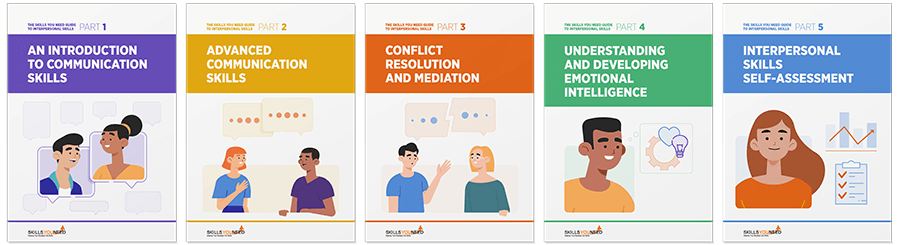
Develop your interpersonal skills with our series of eBooks. Learn about and improve your communication skills, tackle conflict resolution, mediate in difficult situations, and develop your emotional intelligence.
Conclusion
Career progression in the healthcare industry is essential to prevent burnout and keep you motivated to provide the highest standard of patient care. Achieving meaningful advancement is rarely straightforward; it requires an open-minded approach, continuous education, and a willingness to step outside your comfort zone. By actively expanding your professional network, seeking out seasoned mentors, and demonstrating unshakeable leadership and communication on the floor, you can firmly take control of your trajectory and build a deeply rewarding, lucrative healthcare career.
About the Author
Richard Sharp is a Healthcare Administration Consultant and former Clinical Director. With over 20 years of experience navigating complex hospital operations and clinical workflows, Richard shares his strategic insights to help emerging healthcare professionals accelerate their careers and avoid clinical burnout. During his free time, he enjoys hiking, cycling, and cooking.