


How eLearning Can Help Deal with
the Poor Performance of Employees
See also: Online Education and Learning
Every organisation relies on the strength and capability of its employees. While many team members thrive and consistently exceed expectations, others may struggle to meet fundamental performance benchmarks or navigate standard training modules.
As a manager or business leader, you cannot afford to ignore underperformance. Employee output directly impacts the overall success, culture, and profitability of your organisation.
Workplace underperformance occurs when an employee operates below their potential or fails to meet the specific requirements of their role. However, poor performance is rarely a simple case of incompetence or laziness. It is often a symptom of underlying issues that require thoughtful intervention.

There are numerous reasons why an employee might be struggling, including:
- Lack of motivation or engagement
- A deficit in specific capabilities or technical skills
- Insufficient appreciation and acknowledgement from leadership
- An inadequate reward and recognition system
- Heavy, unmanageable workloads leading to burnout
- Poor workplace relationships or a lack of social interaction
- Inadequate tools and resources for learning
These factors can degrade both the quality and quantity of an employee's work. Therefore, dealing with poor performance requires you to dig deeper and identify the root cause rather than merely treating the symptoms.
Diagnosis is the most critical step in performance management. For example, if an employee performs poorly in online training assessments, it is easy to assume they are disengaged. However, such a superficial diagnosis can be counterproductive. The employee might actually be feeling overwhelmed, lacking confidence with the digital interface, or struggling with the specific learning format.
To effectively manage and reverse poor performance, you must take proactive steps to leverage the tools at your disposal, particularly your eLearning infrastructure.
Resupply and Audit Your eLearning Content
Before addressing the employee directly, you must evaluate the eLearning resources currently available within your organisation. Determine whether your existing training materials are genuinely sufficient, up-to-date, and accessible enough to improve the competencies of your workforce.
Engage your team by asking what additional resources they need. Soliciting employee feedback on your training provisions demonstrates that you value their professional development and are committed to their success. When employees feel supported with high-quality, relevant materials, they are significantly more likely to engage with the process and improve their output.
Retrain to Close the Skills Gap
Due to rapid technological advancements and industry restructuring, employee skills can quickly become obsolete. This is why forward-thinking organisations actively participate in continuous workforce upskilling to adapt to market changes.
Once you have identified a specific competency deficit, you must provide targeted retraining. Closing the skills gap is vital for extracting the best from your team. When implementing a retraining initiative, employ modern learning technologies to make the experience engaging and impactful. Working with a dedicated eLearning solutions provider ensures your retraining programmes are built on proven instructional design principles, meaning the content actually resolves the performance issue rather than simply checking a compliance box.
For instance, integrating virtual reality (VR) simulations for complex task training or interactive branching scenarios for customer service can transform a mundane training session into a highly effective learning experience.
Refit Employees to Better-Suited Roles
Occasionally, the root cause of poor performance is a fundamental mismatch between the employee's natural strengths and their current job responsibilities. In such cases, standard retraining may not yield the desired results. Instead, consider whether a lateral move or a role adjustment is necessary.
Refitting an employee involves realigning their daily tasks with their core competencies. This reshuffle can add tremendous value to your business; employees are naturally more productive and engaged when placed in roles where they can leverage their strengths. Career counselling and targeted self-assessment modules within your learning management system (LMS) can help identify these hidden talents and guide successful internal transitions.
Set Clear and Actionable Performance Goals
Improvement is impossible to track without a clear baseline and a defined destination. Encourage your employees to set SMART goals (Specific, Measurable, Attainable, Relevant, and Time-bound). Goal setting provides structure to their eLearning journey and their broader career trajectory.
If an employee struggles to define these objectives independently, assign them experienced mentors who can provide guidance. It is crucial to ensure that personal development goals align directly with the strategic objectives of the organisation. For example, if a team member is learning advanced data analysis software, their specific goal should involve applying those new skills to uncover operational efficiencies within their department.
Assess Progress Consistently
Delivering online training is only half the battle; rigorous and consistent assessment is equally important. Use online training assessments to monitor whether employees are absorbing the material and hitting their performance milestones within the agreed timeframes.
Adopt a learner-centric approach to testing. Avoid relying solely on multiple-choice questions. Instead, incorporate scenario-based assessments, peer reviews, and free-response questions that require the learner to demonstrate critical thinking. These assessments should feel less like a punitive exam and more like an opportunity for the employee to showcase their growing competence.
Reward and Recognise Improvement
Positive reinforcement is a powerful psychological driver. Employees thrive when their hard work and tangible improvements are recognised by management. A robust reward system boosts morale, encourages healthy competition, and is a vital component of talent retention.
Leverage the gamification features available within your LMS. Issuing digital badges, points, or leaderboard recognition for completing difficult modules can inject a sense of achievement into the learning process. Beyond digital rewards, tangible recognition such as a shout-out in a company meeting, a financial bonus, or extra paid time off can solidify the behavioural changes you wish to see.
Provide Immediate and Constructive Feedback
To course-correct effectively, employees need regular, specific, and actionable feedback. Annual performance reviews are insufficient for dealing with active underperformance. Feedback must be timely so the employee can immediately adjust their approach.
Ensure your feedback is entirely objective and focused on observable behaviours and outcomes, rather than personal characteristics. Frame your critiques constructively. Avoid language that diminishes confidence; instead, position the feedback as collaborative problem-solving. A transparent, honest, and unbiased feedback loop is the foundation of a high-performance culture.
Further Reading from Skills You Need
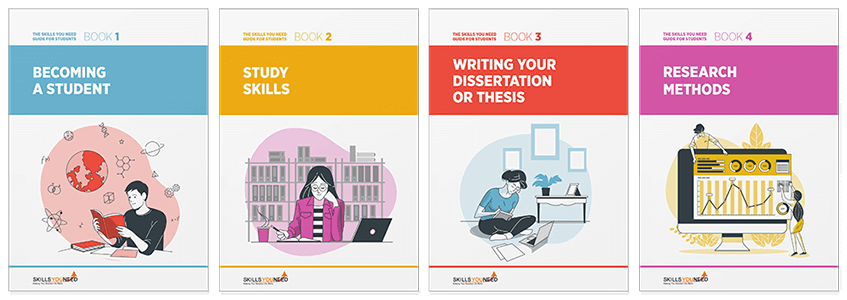
The Skills You Need Guide for Students

Develop the skills you need to make the most of your time as a student.
Our eBooks are ideal for students at all stages of education, school, college and university. They are full of easy-to-follow practical information that will help you to learn more effectively and get better grades.
Conclusion
The poor performance of a few individuals can significantly hinder the collective growth and agility of your organisation. While managing underperforming employees is undoubtedly challenging, it is an essential leadership responsibility. By moving beyond superficial assumptions, diagnosing the true root causes, and deploying targeted, supportive eLearning strategies, you can transform struggling team members into valuable, high-performing assets.
About the Author
Costa Lamprou is a digital learning specialist and content strategist at The Elearning Industry Network. With extensive experience in training deployment and digital product development, Costa helps organisations optimise their learning management systems to improve team performance. When he isn't advising clients on eLearning strategies, Costa is an avid hiker who enjoys exploring local trails.