


The Importance of Developing Soft Skills
See also: Reflective PracticeThe modern world is developing rapidly. To remain a high-quality specialist, technical knowledge and experience are no longer enough. Traditionally, professionals focused almost exclusively on deepening their "hard skills"—a programmer learning a new language, or a mechanic mastering a new engine type.
However, we do not work in isolation. We grow, achieve results, and solve problems through interaction with other people. This is where soft skills become the differentiating factor between a good employee and a great leader.
Soft skills help us adapt to change, interact harmoniously with colleagues, and think creatively to solve complex problems. Often perceived as the "skills of the future," they remain in high demand regardless of economic shifts or technological leaps. In this article, we explore the real value of soft skills and provide actionable strategies to develop them.
What Are Soft Skills?
Unlike hard skills, which are specific to a job or industry, soft skills are universal. They are the personal attributes and social abilities that determine how you interact with the world. While they are intangible, their impact is concrete.
All soft skills can be divided into several core groups:
Communication Skills
In any career, proper negotiation and communication are key to success. This goes beyond simply speaking clearly; it involves the ability to argue your position persuasively, listen actively, and adapt your message to your audience.
Communication encompasses both oratory skills (public speaking and presentation) and business communication (correspondence, reporting, and meeting management). A professional with strong communication skills can bridge the gap between technical teams and non-technical stakeholders, making them invaluable to any organization.
Emotional Intelligence (EQ)
Emotional intelligence involves understanding and regulating your own emotions while perceiving and influencing the emotions of others. It consists of three main components: awareness, self-regulation, and empathy.
Awareness is the ability to understand your own needs and triggers. Analyzing your feelings helps you be more present in professional relationships. Self-regulation allows you to express those emotions appropriately, preventing outbursts that could damage your reputation.
Finally, empathy allows you to understand what a colleague or client is feeling. This is not just about being "nice"; it is a strategic skill that helps you anticipate reactions, build trust, and manage conflict effectively.
Self-Organization Skills
This is the ability to effectively organize your work and manage your time without constant supervision. In an era of remote work, self-organization is critical. It involves prioritizing tasks, setting realistic deadlines, and maintaining focus in a distracting environment.
Creative Thinking
Creativity is not limited to designers or artists. Business leaders and managers need the ability to think outside the box to solve non-standard problems. As the business landscape shifts, the ability to innovate—rather than just follow a manual—becomes a primary competitive advantage.
Stress Tolerance
Major changes are stressful. Whether it is a company merger, a tight deadline, or a global crisis, the ability to remain productive under pressure is vital. High stress tolerance allows a professional to maintain clarity of thought when others panic, stabilizing the entire team.
The Rising Value of Soft Skills
Today, the need for soft skills is stronger than ever. Technology advances so rapidly that technical knowledge quickly becomes obsolete. The coding language you learn today might be outdated in five years, but the ability to lead a team or resolve a conflict will last a lifetime.
Elon Musk, CEO of Tesla, has famously stated that soft skills are critical for long-term success. He predicts that as Artificial Intelligence (AI) and automation take over technical tasks, the human element will become the premium asset.
Consider the rise of automation. Today, software can write basic code, manage schedules, and even handle initial customer service inquiries via chatbots. However, a robot cannot negotiate a complex merger, mentor a struggling junior employee, or navigate office politics with tact.
Research from Harvard, Stanford, and the Carnegie Foundation supports this, suggesting that soft skills account for 85% of career success. We need negotiation skills not only to close deals but to set boundaries in our personal lives. The skill of conflict resolution helps us navigate disagreements with loved ones just as effectively as it diffuses tension in the boardroom.
How to Actively Develop Soft Skills
While you can learn a hard skill (like using a spreadsheet) in a day, developing a soft skill takes time. These skills are deeply rooted in our personality, habits, and mindset. Changing them requires consistent effort and self-reflection.
Here are three proven methods to develop these essential traits:
-
Experience and Reflective Practice
The most effective way to learn is through doing. You cannot learn leadership from a book alone; you must lead. You cannot learn conflict resolution without facing conflict.
In your daily work, pay close attention to your interactions. When a conversation goes poorly, analyze it. Did you interrupt? Did you let your emotions take control? This process of reflective practice turns every workday into a learning opportunity. Reinforce the actions that yield positive results and actively work to discard the habits that cause friction.
-
Structured Learning (Reading and Courses)
While practice is key, theory provides the framework. Reading thematic literature—whether specialized manuals on negotiation or broader books on psychology—can give you new tools to try.
However, passive reading is not enough. You must be self-organized enough to apply what you read. For example, if you read a book on active listening, challenge yourself to use three specific techniques from the book in your next meeting.
-
Coaching and Training Sessions
For accelerated growth, seek out professional training. Workshops, seminars, and coaching sessions provide a safe environment to practice these skills without real-world consequences.
Working with a mentor or coach can provide you with objective feedback that you cannot get from a book. They can point out blind spots in your communication style or emotional reactions, helping you reach a new professional level much faster than you could alone.
Conclusion
Soft skills are no longer just "nice to have"; they are the primary components of professional success in the 21st century. No matter how deep your technical knowledge is, you cannot become a great leader without the ability to communicate, empathize, and adapt.
These skills are your personal toolkit for navigating the complexities of the modern workplace. By investing time in developing your emotional intelligence and communication abilities today, you future-proof your career against the changes of tomorrow.
Further Reading from Skills You Need
The Skills You Need Guide to Interpersonal Skills eBooks.
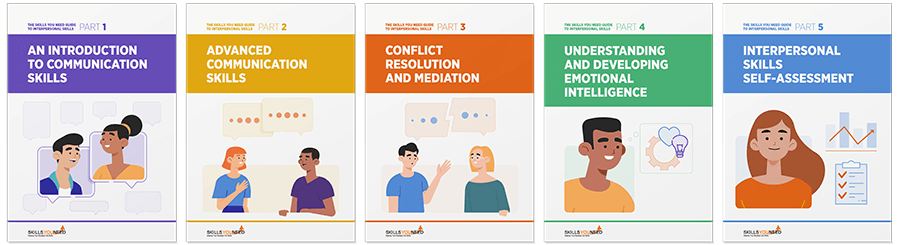
Develop your interpersonal skills with our series of eBooks. Learn about and improve your communication skills, tackle conflict resolution, mediate in difficult situations, and develop your emotional intelligence.
About the Author
Charlie Harrison is a content writer specializing in digital marketing, online sales psychology, and the intersection of technology and human behavior.