


How to Actively Develop Your Leadership Skills
Top Leadership Skills You NeedLeadership skills determine the trajectory of your career. While a university degree and technical proficiency get your foot in the door, it is your ability to lead, influence, and inspire that opens the door to the boardroom.
Leadership is not a title; it is a practice. It requires a deliberate commitment to developing soft skills such as active listening, emotional intelligence, and effective communication.
Many aspiring professionals wait for a promotion before they start thinking like a leader. This is a mistake. You need to take the initiative to command respect in every room you walk into, regardless of your current job title. Much like human rights activist Craig Kielburger, who founded a global charity at the age of 12, you can lead and inspire others long before you receive a formal title. By constantly challenging yourself to be better, you not only accelerate your own growth but also empower and motivate those around you.
Enhanced leadership capabilities make you an indispensable asset. Whether you are eyeing a C-suite position or simply want to manage your current team more effectively, a steady track record of self-improvement speaks for itself. Most of the impressive leaders we see today were not born with these traits; they learned, practiced, and mastered them over time.
Here is how you can actively develop the skills required to lead in the modern business landscape.
Why Leadership Development Matters for Business Survival
An organization can only thrive when its leaders have the foresight to navigate complexity. Given the rising levels of global competition and economic volatility, businesses need leaders who can think beyond the status quo.
The challenges presented by rapid technological advancements and digital transformation are complex. Using these tools to power business growth requires leaders who are adaptable, data-driven, and culturally competent. This is why leadership development is no longer a "nice-to-have" luxury; it is a survival mechanism.
By actively developing leadership skills, entrepreneurs and executives can:
Promote Operational Efficiency: Streamline internal processes by clearly communicating vision and removing bottlenecks that hinder team performance.
Drive Innovation: Create a psychological safety net that encourages employees to experiment, fail fast, and exploit new growth opportunities.
Optimize Talent Retention: People rarely leave bad jobs; they leave bad managers. Strong leadership attracts and retains top-tier talent who are looking for mentorship and growth.
Navigate Change: Create a resilient organization that is adequately prepared to adapt to market shifts, rather than reacting frantically to them.
5 Ways to Actively Develop Your Leadership Skills
You do not need to wait for a formal training workshop to begin your development. Here are five actionable strategies you can implement immediately.
-
Develop Unwavering Discipline
The phrase "discipline equals freedom" creates a paradox in the minds of many. We often associate discipline with punishment or restriction. However, for an aspiring leader, self-discipline is the ultimate power tool. When you are disciplined, you gain control over your time, your emotions, and your output.
All great leaders attest to taking self-discipline seriously because it distinguishes the proactive from the reactive. In your pursuit of leadership, you must nurture productive habits. This might mean waking up earlier to plan your day, adhering to strict time blocks for deep work, or maintaining composure during a crisis.
Consider how your future team will perceive you. If you consistently miss deadlines or arrive late to meetings, you set a standard of mediocrity. Conversely, if you are reliable and time-conscious, you implicitly motivate your team to respect their own time. You lead by example, not by decree.
-
Venture Outside Your Comfort Zone
Growth only happens in the state of discomfort. It is easy to stick to the tasks you have mastered, but complacency is the enemy of leadership. If you never step into the unknown, you never develop the resilience required to guide a team through uncertainty.

You must walk into the space where failure is a possibility. Don't let your job description limit your initiative. Volunteer for that cross-departmental project. Offer to present the quarterly report to the board. Mentor a junior employee even if you feel you are not "ready."
Effective leaders have mastered the art of stretching themselves. They seek out the "learning zone"—that sweet spot just beyond their comfort zone but before the panic zone. By embracing uncertainty, you not only expand your skill set but also demonstrate courage to your peers.
-
Master the Art of Followership
To be a great leader, you must first learn to be a good follower. This concept often bruises egos, as everyone wants to be the "boss." However, intelligent followership is a prerequisite for intelligent leadership.
Being a follower does not mean blind obedience. It means engaging with current leaders, supporting their vision, and learning from their decision-making processes—both good and bad. It involves "managing up," or learning how to support your superiors in a way that helps the organization succeed.
Following teaches you empathy. When you are eventually in charge, you will remember what it felt like to receive vague instructions or unrealistic deadlines, and you will be less likely to inflict those on your team. It teaches you that leadership is not just about getting credit; it is about taking responsibility for the collective outcome.
-
Cultivate Emotional Intelligence (EQ)
Technical skills (IQ) may help you solve a problem, but Emotional Intelligence (EQ) helps you solve people. In the modern workplace, a leader lacking EQ is a liability.
Actively developing your EQ involves increasing your self-awareness. Can you recognize when you are becoming defensive in a meeting? Can you regulate that emotion and respond constructively? It also involves social awareness—the ability to read the room and understand the unstated dynamics between team members.
Start by practicing empathy. Before making a decision that affects your team, pause and genuinely ask yourself: "How will this impact them individually?" A leader who understands the emotional landscape of their team can navigate conflicts and boost morale far more effectively than one who relies solely on logic.
-
Seek 360-Degree Feedback
We often judge ourselves by our intentions, while others judge us by our actions. This gap can lead to a significant blind spot in our self-perception. To bridge this gap, you must actively seek feedback—not just from your boss, but from your peers and subordinates.
This takes courage. Ask specific questions like, "What is one thing I could do differently to support the team better?" or "Do I communicate my expectations clearly?"
When you receive constructive feedback, resist the urge to defend yourself. Listen, absorb, and say "thank you." Then, take action. Visible changes in behaviour based on feedback are the strongest signal you can send that you are serious about your development.
Further Reading from Skills You Need
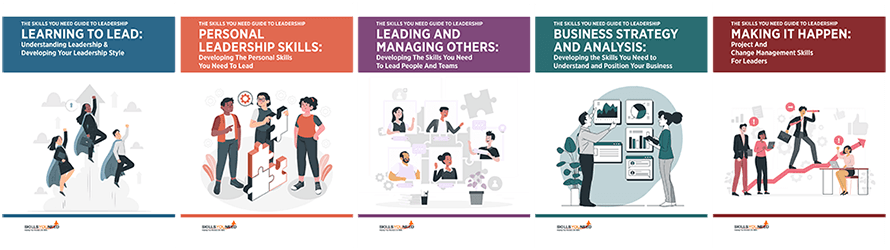
The Skills You Need Guide to Leadership eBooks
Learn more about the skills you need to be an effective leader.
Our eBooks are ideal for new and experienced leaders and are full of easy-to-follow practical information to help you to develop your leadership skills.
Conclusion
Leadership is not a destination; it is a continuous journey of self-refinement. It requires the humility to follow, the discipline to persist, and the courage to step into the unknown.
If you want to actively grow your leadership skills, start today. Do not wait for a title change to give you permission to lead. Take ownership of your discipline, seek out challenges, and prioritize the growth of those around you. By doing so, you will not only advance your own career but also become the kind of leader people genuinely want to follow.
About the Author
Mashum Mollah is an entrepreneur and CEO at BloggerOutreach.io, a dedicated agency that drives visibility and engagement for brands. He enjoys sharing his experiences and data-driven insights on business strategy, digital marketing, and professional development.