

How to Develop Your IT Skills
Before Returning to Education
See also: Digital Skills
Information Technology is a vast, rapidly evolving landscape. For many, the transition from simply enjoying technology to formally studying it can be jarring. There is a significant difference between being "good with computers" and understanding the complex infrastructure that powers the modern world.
If you are planning to return to education to pursue an IT degree or certification, you might feel a mix of excitement and apprehension. Will you be behind? Is the math too difficult? Do you know enough programming?
The good news is that IT is one of the most accessible fields for self-study. In this article, we explore practical ways you can develop your technical hard skills and essential soft skills before you ever step foot in a university lecture hall or log into your first virtual seminar.

Preparing for the IT Learning Curve
Before diving into specific technical tasks, it is important to understand the mindset required for IT. The field changes so quickly that what you learn in year one of a degree might be obsolete by graduation. Therefore, the most valuable skill you can cultivate is the ability to learn independently.
Here are seven strategic ways to build your foundation.
-
Map the Landscape of Modern IT
One of the biggest sources of confusion for new students is the sheer breadth of the industry. "IT" is an umbrella term that covers dozens of specialized career paths. Before starting your course, spend time researching which specific areas interest you. This will give your studies direction and purpose.
Common specializations include:
Cybersecurity: Protecting systems and networks from digital attacks.
Cloud Computing: Managing servers and services hosted on the internet (AWS, Azure, Google Cloud).
Data Science: Using algorithms and statistics to extract insights from structured and unstructured data.
DevOps: The intersection of software development and IT operations, focusing on automation.
Software Development: Building applications, websites, and system software.
You do not need to master all of these, but understanding how they interconnect will give you a significant head start over peers who view them as isolated subjects.
-
Master Self-Directed Learning
University courses in IT often require a high degree of autonomy. You will be given a concept, but you will often be expected to figure out the implementation yourself. If you are used to a hand-holding educational environment, this can be a shock.

To prepare, you need to push yourself out of your Comfort Zone and into the Learning Zone. Start by taking a free online course (MOOC) without a strict deadline. Practice the discipline of setting your own schedule, researching error messages when code breaks, and finding solutions without a teacher's immediate help.
This "struggle" is where the real learning happens. In IT, the ability to read documentation and troubleshoot your own problems is arguably more important than memorizing facts.
-
Immerse Yourself in Enterprise Tech Media
Many prospective IT students make the mistake of thinking that reading gadget reviews or gaming news counts as "tech research." While knowing the specs of the latest smartphone is interesting, it is rarely relevant to an IT career.
To prepare for education, shift your media diet from consumer technology to enterprise technology. Start following blogs, podcasts, and news outlets that discuss:
Server infrastructure and data centers.
Major security breaches and how they happened.
Open-source software developments.
Artificial Intelligence ethics and implementation.
By immersing yourself in the language of the industry, you will find that the terminology used in your lectures feels familiar rather than foreign.
-
Build a Portfolio (The "Home Lab")
In creative fields, students have portfolios. In IT, you should have a "Home Lab" or a GitHub repository. There is no better way to demonstrate passion and skill than by building something before you are asked to.
Since social media is all about personal branding, use it to document your learning journey. Simple projects you can start now include:
Building a simple website from scratch (HTML/CSS) and hosting it yourself.
Setting up a virtual machine on your home computer to experiment with a different operating system (like Linux).
Creating a simple Python script to automate a file-sorting task on your desktop.
Documenting these small wins shows future professors and employers that you possess curiosity—a trait that cannot be taught.
-
Brush Up on Logic and Mathematics
Programming is a fundamental skill for almost every branch of IT, from networking to data analysis. Before you start your course, familiarize yourself with the basics of a beginner-friendly language like Python. You do not need to be an expert; simply understanding variables, loops, and logic statements will put you weeks ahead of the curriculum.
Furthermore, do not neglect mathematics. While you may not need complex calculus for every IT job, a strong grasp of logic, statistics, and algebra is crucial. Computer science relies heavily on "Boolean logic" (True/False states), which is essentially a mathematical way of thinking. As Artificial Intelligence and Machine Learning become standard parts of the IT curriculum, being comfortable with data and statistics will be a massive advantage.
-
Get Comfortable with Linux
Most home users run Windows or macOS, but the internet runs on Linux. A significant portion of university IT curriculums will involve using the command line (terminal) rather than a graphical mouse-and-click interface.
This is often the most intimidating hurdle for new students. You can overcome this fear early by downloading a beginner-friendly version of Linux (like Ubuntu) and running it on an old laptop or in a virtual environment. Learn basic commands to navigate folders and create files. This small preparation step will make your first semester significantly less stressful.
-
Develop Collaboration and Communication Skills
The stereotype of the solitary IT worker hiding in a basement is outdated. Modern IT is a team sport. Whether you are developing software using Agile methodologies or responding to a cyber-attack, you will be working in a team.
Colleges place a heavy emphasis on group projects to simulate this environment. To prepare, reflect on your teamwork skills. Are you a good listener? Can you explain a complex technical concept to someone without using jargon?
The "RTFM" (Read The Manual) culture of the past, where asking questions was frowned upon, is disappearing. It is being replaced by a culture of collaboration and knowledge sharing. Developing the emotional intelligence to work well with others is just as important as learning to code.
Further Reading from Skills You Need
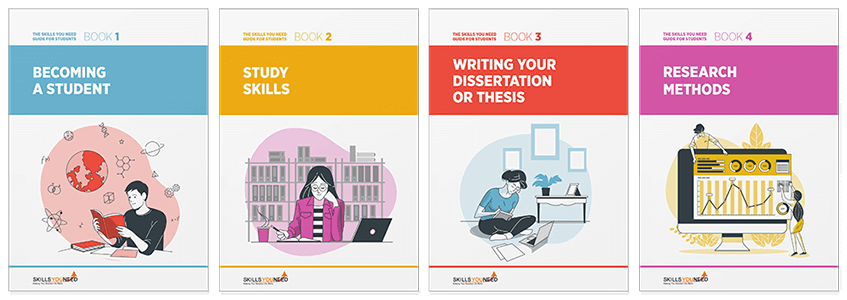
The Skills You Need Guide for Students

Develop the skills you need to make the most of your time as a student.
Our eBooks are ideal for students at all stages of education, school, college and university. They are full of easy-to-follow practical information that will help you to learn more effectively and get better grades.
Conclusion
Returning to education to study IT is an investment in your future. While the subject matter can be challenging, it is also incredibly rewarding for those who are prepared.
By taking the time now to map the landscape, dabble in coding, get comfortable with new operating systems, and—most importantly—adopt a mindset of continuous self-directed learning, you will not just survive your course; you will thrive in it. The technology industry rewards curiosity more than any other trait. Start being curious today.
About the Author
Cristina Par is a content specialist with a passion for writing articles that bridge the gap between brands and their audiences. She believes that high-quality content coupled with strategic insight can transform the way professionals approach their careers.