


Top Tips on How to Best Deal
with Today’s HR Challenges
See also: What Sort of Leader are You?
Human Resources has arguably undergone more transformation in the last few years than in the previous three decades combined. You may be asking yourself how you can stay ahead of the game with the many challenges that are coming at HR professionals today. But what are the biggest challenges HR professionals face today?
As the workforce evolves, HR professionals need to change how they hire, engage, and retain talent. The traditional, rigid methods used for hiring and managing candidates simply do not align with modern expectations. Standards have changed, and flexibility has become the new baseline.
The rise of hybrid working, shifting generational expectations, and the rapid integration of new technologies means HR professionals must become strategic partners rather than purely administrative overseers. In this article, we offer you some actionable top tips on how you can proactively deal with these complex new HR challenges and build a resilient workforce.

Top Tips on How to Deal with Today’s HR Challenges
Navigating Hybrid and Flexible Working Models
The normalisation of hybrid and flexible working is a permanent shift in the employment landscape. While this offers immense benefits for work-life balance, it introduces significant complexities for HR teams tasked with maintaining company culture, ensuring equitable treatment, and monitoring productivity without resorting to micromanagement.
One of the primary challenges is preventing proximity bias—the subconscious tendency to favour employees who are physically present in the office over those working remotely. HR professionals must champion policies that measure performance based on outcomes rather than physical presence.
To succeed in a hybrid environment, HR leaders should focus on equipping managers with the skills to lead distributed teams effectively. This involves fostering a culture of high trust and clear communication. Regular, structured check-ins become essential, as do intentional efforts to bring remote and in-office staff together for collaborative sessions.
For more about how other organisations are adapting to these shifts, you may find it helpful to read our page on the challenges faced by HR departments.
Fostering a Culture of Continuous Performance Management
The traditional annual performance review is increasingly viewed as an outdated, stressful, and ineffective HR process. Today’s dynamic business environment demands agility, meaning that waiting twelve months to correct course or provide praise is no longer viable.
HR professionals should spearhead the transition toward continuous performance management. This model relies on frequent, informal feedback loops and regular one-to-one conversations between managers and their direct reports. Rather than a purely evaluative process, these discussions should be developmental, focusing on real-time coaching, immediate course correction, and the removal of workplace roadblocks.
Implementing this requires a significant cultural shift. HR teams must train managers on how to deliver constructive feedback effectively and how to receive feedback from their teams in return. When performance issues do arise, handling them promptly through a structured approach is far more effective than letting them fester.
For more about how to do so, you may find it helpful to read our page on discipline and managing poor performance.
Prioritising Holistic Employee Well-being
Employee well-being has transitioned from being a supplementary workplace perk to a core pillar of talent retention and organisational success. Today’s workforce is highly attuned to the risks of burnout, stress, and poor mental health, and they expect their employers to take a proactive stance in supporting them.
Modern HR challenges involve looking beyond basic health insurance or subsidised gym memberships. True well-being initiatives must address the root causes of workplace stress, such as chronic overworking, toxic team dynamics, or a lack of psychological safety. HR professionals must advocate for boundaries—such as discouraging after-hours emails—and ensure that employees feel comfortable taking the leave they are entitled to.
Furthermore, HR must equip managers to spot the early warning signs of burnout and provide them with the resources to support struggling team members. Creating a psychologically safe environment where employees feel they can voice concerns without fear of repercussion is arguably one of the most critical skills you need for a career in HR today.
Upskilling, Reskilling, and Career Pathing
The rapid pace of technological advancement, particularly with the integration of artificial intelligence and automation into everyday workflows, means that the skills required for many roles are constantly evolving. A significant challenge for HR is ensuring that the workforce’s capabilities keep pace with the organisation’s strategic goals.
Rather than relying solely on external recruitment to fill skills gaps—which is often costly and competitive—forward-thinking HR teams are focusing heavily on internal upskilling and reskilling. To build a robust internal talent pipeline, HR professionals should consider the following steps:
Conducting regular skills gap analyses to identify future business needs.
Providing employees with advanced training (upskilling) to help them perform their current roles more effectively in a changing landscape.
Training employees for entirely new roles (reskilling) to redeploy talent from obsolete functions to high-demand areas.
To facilitate this, HR must work closely with departmental leaders to map out future skills requirements and create transparent, accessible career pathways for employees. When individuals can clearly see how they can grow and advance within a company, their engagement and loyalty increase dramatically.
Developing Adaptable Leadership and Retaining Talent
It is a well-worn adage that people leave bad managers, not bad companies. In an era where top talent has more options and greater mobility than ever before, poor leadership is a luxury no organisation can afford. One of the most pressing HR challenges is ensuring that those promoted to management positions actually possess the necessary interpersonal skills to lead effectively.
Historically, individuals were often promoted to management based on their technical proficiency or tenure, rather than their ability to lead and inspire people. HR must intervene to disrupt this pattern. Leadership development programs must be robust, focusing heavily on emotional intelligence, active listening, and the ability to navigate difficult conversations.
HR professionals must also champion inclusive leadership, ensuring that managers are equipped to build diverse, high-performing teams where every member feels valued. By investing in the people who manage the people, HR can significantly reduce turnover rates and cultivate a more resilient, motivated workforce.
Managing Workplace Conflict Proactively
With increased diversity in the workplace—encompassing diverse backgrounds, working styles, and generational perspectives—occasional friction is inevitable. However, unresolved conflict can quickly toxify a team's culture, leading to plummeted morale and reduced productivity.
HR's role is not necessarily to step in and solve every minor disagreement, but rather to create a framework for healthy conflict resolution. This involves training managers to mediate disputes objectively and encouraging a culture where differing opinions can be debated constructively without personal animosity.
When HR does need to intervene, it must be done with neutrality, empathy, and a clear adherence to company policy. Establishing clear protocols for grievances and ensuring they are handled swiftly and fairly is essential.
For actionable advice on navigating these tricky waters, you may find it helpful to read our page on how to better manage conflict in the workplace.
Further Reading from Skills You Need
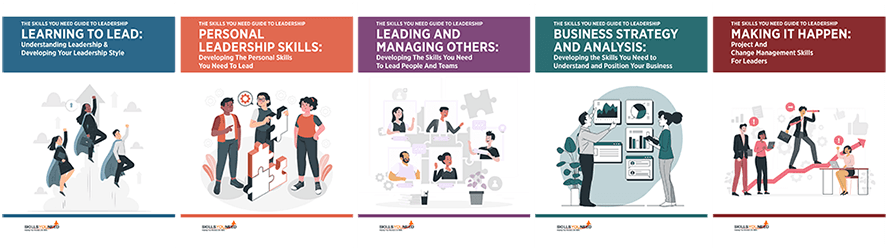
The Skills You Need Guide to Leadership eBooks
Learn more about the skills you need to be an effective leader.
Our eBooks are ideal for new and experienced leaders and are full of easy-to-follow practical information to help you to develop your leadership skills.
Wrapping Up
HR professionals are the architects of organisational culture and the guardians of employee experience. Dealing with today’s HR challenges requires a fundamental shift in mindset—from reactive problem-solving to proactive, strategic planning.
The challenges of hybrid working, continuous performance management, employee well-being, upskilling, and leadership development are deeply interconnected. Addressing them successfully requires flexibility, transparency, and a genuine commitment to putting people first.
While we can never predict exactly what the future of work will look like, one thing is certain: organisations that empower their HR teams to innovate, adapt, and build supportive environments will be the ones that thrive. By treating your employees as your most valuable asset and investing in their continuous growth, you build an agile organisation capable of weathering whatever challenges tomorrow may bring.
About the Author
Tony Ademi is a seasoned organisational consultant and workplace strategist. With a deep interest in human resources and team dynamics, Tony has spent years researching and advising on modern workforce challenges, helping companies build resilient, high-performing teams.