


Customer Service for Pros: Learn From the Best
See also: Building RapportEvery modern business, regardless of scale, is essentially a service business. In a global economy where products can be replicated almost instantly, the quality of your customer service is often the only remaining competitive advantage. We base our purchasing decisions on our past interactions with a brand, and it only takes one negative experience for a patron to boycott a company and influence thousands of others to do the same.
The best way to improve your own customer interactions is to learn from the organisations that have turned service into a science. By studying "The Pros," we can identify scalable habits that transform a simple transaction into a loyal relationship. Below, we examine the tried and tested approaches from world-renowned service gurus, providing a roadmap for achieving excellence in your own professional sphere.
-
The Disney Model: Cultural Immersion and Standardisation
Disney is the undisputed gold standard for placing customer service at the absolute centre of organisational identity. Their philosophy is built on the idea that there is no such thing as a "minor" interaction. Every touchpoint is an opportunity to reinforce the brand's identity and values.
One of the most profound lessons from Disney is the concept of "The Four Keys." Every employee, from executive leadership to park maintenance, is trained to prioritise Safety, Courtesy, Show, and Efficiency, in that specific order. This hierarchy provides employees with a decision-making framework. For example, if a "Cast Member" (the Disney term for an employee) sees a safety hazard, they are empowered to pause a "Show" interaction to address it immediately.
For pros in any industry, the lesson here is standardisation without losing the human touch. Disney uses a "Quality Service Cycle" that involves understanding the guest's "Compass"—their Needs, Wants, Stereotypes, and Emotions. By anticipating that a guest might be tired or overwhelmed, staff can pivot their approach before a complaint even occurs. This requires high levels of Emotional Intelligence and a commitment to Understanding Others.
Small business owners should take note: Disney does not leave service to chance. They have a sanctioned response for nearly every scenario. While you may not need a thousand-page manual, you do need clear "non-negotiables" for how your team represents your brand. This includes training in Customer Service Skills that go beyond basic politeness and move into proactive problem-solving.
-
The Ritz-Carlton: The Power of Employee Empowerment
While Disney focuses on standardisation, The Ritz-Carlton is famous for its "Gold Standards" and the extreme level of trust it places in its "Ladies and Gentlemen" (the employees). Their most famous "pro" tactic is the empowerment rule: every employee has a dedicated daily allowance per guest to resolve a problem or create a "wow" moment, without needing to ask a manager for permission.
This is the ultimate expression of empowerment. It removes the friction of the "let me speak to my manager" delay, which is often the point where a customer's frustration turns into anger. For a professional, this teaches the importance of autonomy. When you or your staff are empowered to make decisions, you demonstrate Trustworthiness and Conscientiousness.
To implement this in a smaller business, you don't necessarily need a massive budget. You do, however, need to provide "decision-making boundaries." If an employee knows they can offer a discount or a free replacement to fix an error immediately, they can salvage a relationship that might otherwise be lost. This proactive approach relies heavily on Decision-Making and Problem-Solving at the front line.
-
JetBlue and the Digital Omnichannel Strategy
In the digital age, "The Pros" are those who have mastered service across multiple platforms simultaneously. JetBlue has long been a leader in using social media not just for marketing, but as a critical service channel. Their presence on digital platforms is defined by "The 80/20 Rule": 20% of their content is promotional, while 80% is purely conversational and helpful.
The lesson for modern professionals is speed and tone. Online customers expect a response within minutes, not days. JetBlue's "pro" move is striking a balance between humour and helpfulness. They use Active Listening in a digital context—monitoring brand mentions even when the customer hasn't "tagged" them directly. By using monitoring tools, you can engage with a customer who is venting their frustration before that frustration goes viral.
However, modern digital service requires more than just speed. It requires "Omnichannel Consistency." This means the customer should get the same high-level answer whether they call, email, or use instant messaging. Professionals must ensure that their Communication Skills are adapted for the brevity of digital platforms without losing the Tact and Diplomacy required for sensitive issues.
-
Service Recovery: Turning Failures into Loyalty
The hallmark of a service professional is not the absence of errors, but the quality of the "Service Recovery." Research into the "Service Recovery Paradox" shows that a customer who has a problem resolved successfully often becomes more loyal than a customer who never had a problem at all.
To achieve this, many pros use models like the HEARD method (Hear, Empathise, Apologise, Resolve, Diagnose). The first step is to listen without interruption, which allows the customer to release their frustration. Next, you must show genuine What is Empathy?. An apology should be sincere and specific; "I'm sorry you feel that way" is not an apology, but a deflection. A true "pro" says, "I'm sorry we missed the deadline; I understand how much stress this has caused you."
Resolution must be swift and, where possible, exceed expectations. If you made a mistake on a shipment, don't just send the replacement; send it via overnight express and include a "gestural" discount for the next order. Finally, Diagnose the root cause to ensure the error does not happen again. This lifecycle of recovery is a core part of Conflict Resolution and Mediation Skills.
Further Reading from Skills You Need
The Skills You Need Guide to Interpersonal Skills eBooks.
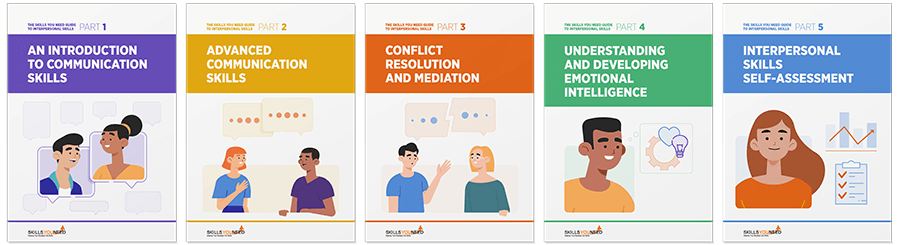
Develop your interpersonal skills with our series of eBooks. Learn about and improve your communication skills, tackle conflict resolution, mediate in difficult situations, and develop your emotional intelligence.
The Future of Professional Service: Technology and Empathy
As technology becomes more integrated into the customer experience, the next "pro" frontier is the balance between automated efficiency and human empathy. Automation can handle the majority of routine queries, but this raises the stakes for the complex interactions that remain. When a customer finally reaches a human, they are often dealing with an emotionally charged issue that a machine couldn't solve. This means the service pros of the future must be specialists in interpersonal dynamics.
You should pay attention to the service you receive from other businesses. Try imitating the tactics you like, and avoiding those you don't. Above all, follow the ultimate golden rule of customer service: always treat your customers the way you would like to be treated. By investing in Employability Skills and mastering Building Rapport, you ensure that the "human touch" remains your organisation's most valuable asset.
About the Author
This article was originally contributed by Simon Markland, a specialist in international business logistics. It has been extensively updated by the SkillsYouNeed editorial team to provide a comprehensive guide to modern service standards and professional interpersonal dynamics.