


7 Productivity Hacks Every
Small Business Owner Should Know
See also: Continuous Professional Development
As your small business grows, the excitement of the launch phase often gives way to the operational reality of the daily grind. You may find that the brilliant idea you started with has morphed into a seemingly endless series of administrative tasks, emails, and fires to put out.
In this environment, it is easy to fall into the trap of equating "busyness" with "productivity." You might be working 12-hour days, but if that time is spent on low-value tasks or correcting errors caused by a disorganized team, your business isn't actually moving forward.
True productivity is not about doing more things; it is about doing the right things efficiently. By adopting a people-centered workforce management methodology and leveraging modern tools, you can achieve your goals without burning out your best performers. In this article, we outline seven essential productivity hacks to increase your team's output while maintaining high morale and work quality.
-
Centralize and Streamline Collaboration
In the modern hybrid workplace, collaboration is the engine of progress, but it can also be the source of chaos. If your team is communicating across WhatsApp, email, Slack, and Zoom simultaneously, information will get lost.
To hack productivity, you must create a "Single Source of Truth." This usually means adopting a dedicated Project Management (PM) platform (like Trello, Asana, or Monday.com). All tasks, files, and feedback related to a specific project should live in that platform, not in an email chain.
Actionable Tip: Implement a "No Internal Email" policy for project work. If it relates to a task, it goes on the board. This reduces inbox clutter and ensures that if a team member is sick, the rest of the team can see exactly where the project stands without needing to hack into their email account.
-
The "Singletasking" Revolution
While spinning more plates than a circus performer might look impressive, research consistently shows that multitasking is a myth. The human brain cannot focus on two cognitive tasks at once; it simply switches between them rapidly. This "context switching" comes with a heavy cognitive tax, decreasing productivity by as much as 40%.
To combat this, you must learn how to prioritize tasks ruthlessly. Not every item on your to-do list deserves your immediate attention.
A powerful tool for this is the Eisenhower Matrix, which categorizes tasks by urgency and importance:

How to use it:
Do First (Urgent/Important): Crises, deadlines, and client problems.
Schedule (Not Urgent/Important): Strategic planning, relationship building, and exercise. This is where long-term growth happens.
Delegate (Urgent/Not Important): Interruptions, some meetings, and administrative reports.
Delete (Not Urgent/Not Important): Scrolling social media, sorting junk mail.
-
Optimize Your Physical and Digital Workspace
Whether your business operates from a sleek executive suite or a series of home offices, the environment dictates the output. A cluttered, dark, or noisy space is a productivity killer.
Consider the following upgrades to your team's environment:
Zoning: If you have an open-plan office, create "quiet zones" or booths where people can go for deep work without interruption.
Biophilia: Introduce plants and natural light. Studies suggest that connecting with nature, even via office plants, improves cognitive function and mood.
Ergonomics: Discomfort is distracting. Ensuring your team has supportive chairs and monitors at eye level prevents the fatigue that sets in by 3 PM.
Do not neglect the digital workspace. Ensure that everyone is using updated hardware. Waiting 10 minutes for a computer to boot up every morning adds up to over 40 hours of lost time per employee per year.
-
Master Your Schedule (Defeating Time Vampires)
The idea that we all have the same 24 hours is technically true, but effectively false. Your energy fluctuates throughout the day, and your schedule should reflect that.
Taming the Email Beast
Reading and responding to emails consumes nearly 30% of the average workweek. Constant notification pings fragment your focus. Encourage your team to practice "Email Batching"—checking inboxes only at set times (e.g., 9:00 AM, 1:00 PM, and 4:00 PM). This frees up large blocks of uninterrupted time for actual work.Killing the Zombie Meeting
Meetings are often where productivity goes to die. To make meetings effective, apply strict rules:No Agenda, No Meeting: If the organizer cannot define the purpose in three bullet points, the meeting should be an email.
The 2-Pizza Rule: (borrowed from Amazon): Never have a meeting where two pizzas wouldn't be enough to feed the group. Smaller groups make decisions; larger groups just talk.
Stand-ups: For status updates, keep everyone standing. It naturally encourages brevity.
-
Automate the Repetitive
If you hired your team for their brainpower and creativity, do not waste their potential on data entry. We are in the golden age of automation, and affordable tools exist for almost every manual process.
Look for tasks that are high-volume but low-complexity. For example:
Scheduling: Use tools like Calendly to avoid the "when are you free?" email ping-pong.
Finance: Use software that automatically chases unpaid invoices.
Logistics: If you sell products, shipping can be a massive time sink. Integrate your e-commerce store with a free shipping platform like Rollo Ship. This will allow you to automate your shipments and manage orders from every marketplace in one unified dashboard—plus score hefty shipping discounts.
By automating the mechanical aspects of the business, you free up your team to focus on strategy and customer experience.
-
Cultivate "Deep Work" and Remove Distractions
According to influential thinkers like Cal Newport, the most valuable work in the knowledge economy is "Deep Work"—professional activities performed in a state of distraction-free concentration that push your cognitive capabilities to their limit.
However, modern offices are designed for "Shallow Work." To hack this, you need to address disengagement. When employees are bored or unsure of their value, they succumb to distractions like social media or office gossip.
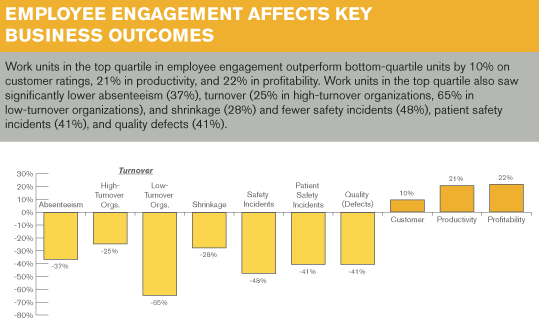
Tactics for Focus:
The Pomodoro Technique: Work for 25 minutes, break for 5. This helps those who struggle with procrastination to just "get started."
Headphones Rule: Establish a cultural norm where wearing headphones means "Do Not Disturb."
Notification Diets: Encourage staff to turn off non-essential desktop notifications. You cannot do deep work if a Slack banner pops up every 45 seconds.
-
Set SMART Goals (and Stick to Them)
High-pressure environments that rely on vague demands like "work harder" or "sell more" are ironically unproductive. They create a culture of fear and burnout.
Productivity thrives on clarity. Goals should be structured using the SMART framework:
Specific: Not "increase sales," but "increase Q3 sales of Product X."
Measurable: "By 10%."
Achievable: Is this realistic given our current resources?
Relevant: Does this align with our annual business mission?
Time-bound: "By September 30th."
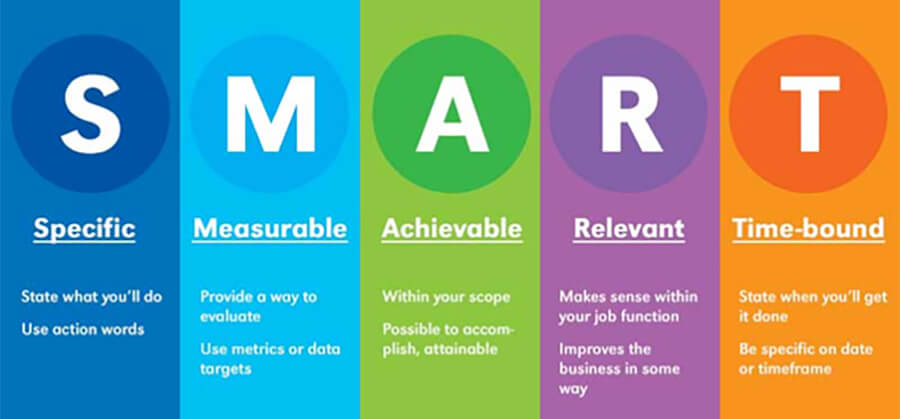
When goals are clear, your team stops wasting time guessing what the priority is. They can autonomously make decisions that align with the objective, reducing the bottleneck of constant management approval.
Further Reading from Skills You Need
The Skills You Need Guide to Leadership eBooks
Learn more about the skills you need to be an effective leader.
Our eBooks are ideal for new and experienced leaders and are full of easy-to-follow practical information to help you to develop your leadership skills.
In Closing
With a few simple adjustments, creating a more productive workplace can pay huge dividends. It is not about forcing people to work faster; it is about removing the friction that slows them down.
By dropping the "multitasking myth," optimizing your physical and digital environments, and automating repetitive tasks, you create a culture of high performance. Finally, remember that productivity is a byproduct of engagement. When you build a healthy workplace culture where goals are clear and time is respected, your business will not just survive—it will flourish.

About the Author
Nico is the founder of Crunch Marketing. The company works with enterprise SaaS clients, helping them scale lead generation globally across EMEA, APAC, and other regions.