


How Augmented Reality is Transforming
Employee Skill Development
See also: Motivation Skills
There is no doubt that Augmented Reality (AR) has graduated from a novelty technology to a serious business tool. While early iterations were focused on gaming and entertainment, the corporate world has since recognized AR as a powerhouse for learning and development.
The market reflects this shift. The global AR market size was valued at over $93 billion in 2024 and is projected to grow exponentially in the coming decade. More importantly, the specific market for AR and VR in corporate training is booming, driven by the need for remote, scalable, and effective upskilling solutions.
In this article, we explore how AR is reshaping the landscape of employee training, moving beyond simple engagement to deliver measurable improvements in safety, retention, and technical proficiency.
Understanding the Tool: What is Augmented Reality?
To understand its application, we must first distinguish Augmented Reality (AR) from its cousin, Virtual Reality (VR). While they are often grouped together under the umbrella of "Extended Reality" (XR), their functions are distinct.
Virtual Reality (VR) creates a completely immersive, computer-generated environment that shuts out the physical world. It requires a headset and is best suited for total immersion simulations.
Augmented Reality (AR), conversely, keeps the user grounded in the real world but overlays digital information—such as images, text, or 3D models—onto their physical view. Ideally, this creates a composite view where real and virtual elements coexist.
This distinction is critical for employee development. Because AR enhances the real world rather than replacing it, it allows for "learning in the flow of work." An employee does not need to leave their station or wear a blinding headset to access information; they can see digital guides overlaid directly onto the machinery they are repairing or the shelf they are stocking.
Modern smartphones and tablets possess all the necessary processing power to drive AR experiences, making it far more accessible and scalable than VR, which often requires dedicated hardware.
The Strategic Benefits of AR in Training
Why are major corporations investing billions into this technology? The answer lies in the limitations of traditional training methods. Classroom lectures and static manuals often suffer from low retention rates. AR addresses these core challenges head-on.
-
Bridging the Gap Between Theory and Practice
One of the oldest challenges in training is the "transfer of learning"—the difficulty employees face when trying to apply classroom theory to real-world tasks. AR eliminates this gap by delivering information at the exact moment of need.
For example, instead of reading a manual about a control panel and then trying to remember it later, an employee can point a tablet at the panel and see digital labels, operational stats, and step-by-step instructions hovering over the physical buttons. This immediate context boosts comprehension and reduces error rates.
-
Accelerating Proficiency and Retention
Studies consistently show that "learning by doing" (experiential learning) is superior to passive listening. AR turns every training session into an active experience. Research indicates that employees trained with AR/VR tools can learn up to four times faster than classroom learners and demonstrate significantly higher confidence in applying their skills.
By engaging visual, auditory, and kinesthetic learning styles simultaneously, AR creates stronger neural pathways, leading to better long-term retention of complex procedures.
-
Enhancing Safety in High-Risk Environments
In industries like manufacturing, energy, and healthcare, training mistakes can be dangerous or fatal. AR provides a safety net. New hires can practice procedures on real equipment with digital "guardrails."
For instance, an AR overlay can highlight dangerous high-voltage zones on a piece of equipment or visualize internal components that are otherwise invisible, allowing trainees to understand the risks without physical exposure to hazards.
Real-World Applications Across Industries
While early adoption was heavy in industrial sectors, AR is now proving its value across a diverse range of fields.
Healthcare: Visualizing the Invisible
The medical field has been a pioneer in AR adoption. A prime example is vein visualization technology. Companies like AccuVein use AR to project a map of a patient's peripheral veins directly onto the surface of the skin. This assists nurses and doctors in locating veins for cannulation, significantly reducing the number of "missed" sticks and improving patient comfort.
Furthermore, AR is revolutionizing surgical training. Surgeons can now overlay 3D holographic models of a patient’s anatomy onto the patient during surgery, acting as a real-time GPS that guides incisions and implant placements with sub-millimeter accuracy.
Beyond training, intraoperative AR navigation systems such as VisAR overlay patient-specific 3D models from CT/MRI onto the surgical field through head-mounted displays, giving surgeons real-time, hands-free guidance. By aligning holograms with anatomy at sub-millimeter precision, these tools can support complex procedures in neurosurgery, spine, and orthopedics, reduce fluoroscopy exposure, and streamline sterile workflows. This illustrates how AR can move from simulation to point-of-care performance support, improving accuracy and team communication in high-stakes environments.
Retail: Scalable Onboarding
Retail giants like Walmart have utilized AR and VR technologies to standardize training across thousands of stores. By using immersive technology, they can simulate high-pressure scenarios—such as the Black Friday rush or a spills cleanup—without disrupting actual store operations.
This approach allows associates to experience the chaos of peak retail hours in a controlled environment, practicing their customer service and decision-making skills so they are prepared for the real thing.
Soft Skills: Empathy and Leadership
Perhaps the most surprising application of AR is in the development of soft skills. Interpersonal skills like empathy, conflict resolution, and leadership are notoriously difficult to teach via textbooks.
New AR and VR platforms allow leaders to engage in simulated conversations with virtual avatars. These avatars are often powered by Artificial Intelligence (AI) to react realistically to the user’s tone and choice of words. A manager can practice firing an employee, de-escalating an angry customer, or delivering a performance review multiple times, refining their approach in a safe, private space before facing a real human being.
Overcoming Implementation Challenges
While the benefits are clear, integrating AR into a corporate training strategy is not without hurdles. Businesses must navigate several challenges to ensure a successful rollout.
-
Hardware and Scalability
While smartphones can run AR apps, hands-free experiences often require smart glasses or headsets. equipping an entire workforce with this hardware can be a significant upfront investment. Companies often start with pilot programs using existing mobile devices before committing to wearable tech.
-
Content Creation and Maintenance
Creating high-quality AR content requires 3D modeling and coding skills that are rarely found in traditional Learning & Development (L&D) teams. Unlike a PDF manual, you cannot simply "edit" an AR experience in a word processor; it requires specialized software.
However, the rise of "no-code" AR creation platforms is lowering this barrier, allowing trainers to drag-and-drop digital assets into real-world triggers without needing a degree in computer science.
-
The "Novelty Effect"
There is a risk that employees engage with AR training simply because it is new and "cool," rather than focusing on the educational content. To combat this, AR initiatives must be tied to clear learning objectives and performance metrics. The technology should effectively fade into the background, becoming a seamless tool rather than a distraction.
The Future of AR in Learning
Looking ahead, the convergence of AR with Artificial Intelligence (AI) promises even more personalized learning experiences. Imagine an AR coach that not only guides you through a repair but analyzes your hand movements in real-time, offering corrective feedback instantly.
As hardware becomes lighter, cheaper, and more powerful, AR will likely transition from a specialized training tool to an everyday workplace assistant. It will become the "digital layer" of our work lives, constantly providing the context and knowledge we need to perform at our best.
Conclusion
Augmented Reality offers a powerful solution to the age-old problem of how to train employees effectively, efficiently, and safely. By merging the digital and physical worlds, it transforms passive learning into active mastery.
For organizations willing to navigate the initial implementation hurdles, AR provides a competitive advantage that goes beyond just "better training." It creates a workforce that is more agile, more confident, and better equipped to handle the complexities of the modern workplace. As the technology matures, the question for leaders is no longer if they should use AR, but how they will leverage it to unlock the potential of their people.
Further Reading from Skills You Need
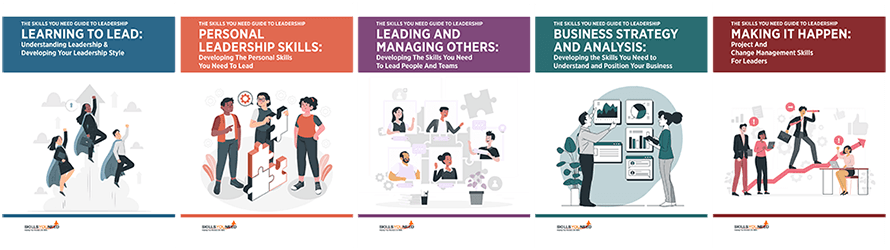
The Skills You Need Guide to Leadership eBooks
Learn more about the skills you need to be an effective leader.
Our eBooks are ideal for new and experienced leaders and are full of easy-to-follow practical information to help you to develop your leadership skills.
About the Author
Lewis Humphries is a freelance technology writer and copywriter with a passion for exploring how emerging tech shapes the future of work.