


Auditory Learners:
Are You Using Effective Revision Techniques?
See also: Revision Skills
When a busy term draws to a close, your mind swiftly switches to focus on all the fun activities that are suddenly on offer to you—and why not? You have worked hard, and you deserve time to recharge your batteries.
However, as exam season approaches or a new academic year looms on the horizon, returning to the grindstone can feel overwhelming. To make this transition easier and ensure your study time is used as effectively as possible, you must move away from generic, one-size-fits-all study advice. No matter what level of education you are currently at, recognising your specific learning style is the key to working smarter, not harder.
If you prefer to hear somebody explain complex information, rely heavily on podcasts or audiobooks, and rarely struggle to maintain focus during a verbal lecture, it is highly likely that you are an auditory learner. By tailoring your revision to this specific cognitive strength, you can drastically reduce the time it takes to absorb and retain information.
Are You an Auditory Learner?
Auditory learners absorb information best when actively listening, discussing, and verbally processing information, as opposed to passively making written notes from a dense textbook. If you have always preferred to learn through discussion and find that your knowledge "sticks" better when you talk it through, you almost certainly fit this profile.
Take a look at a few common auditory learner traits to discover whether you tick the boxes:
- Do you have a fantastic memory for past conversations, often able to quote people word-for-word?
- Can you easily remember the lyrics to a new song after only hearing it a few times?
- Are you a fan of healthy debate, verbal brainstorming, or group discussions?
- Do you process complex ideas better by explaining them out loud to yourself?
- Do you often find visual study aids, like complex diagrams or mind maps, confusing or unhelpful?
If these traits sound all too familiar, traditional revision techniques—like silently copying out textbook chapters or staring at colour-coded flashcards—have likely been doing you a massive disservice.
Modern Revision Techniques for Auditory Learners
There are numerous modern, highly effective learning techniques that appeal specifically to the auditory cognitive style. Here are some of the best ways to upgrade your revision sessions:
Leverage Text-to-Speech and Audio Tools
If you find taking written notes less beneficial, you should pivot to audio-first study methods. Today, auditory learners have a massive advantage thanks to modern technology. Instead of forcing yourself to read a 50-page PDF, use text-to-speech software or browser extensions to have the document read aloud to you while you take a walk.
You can also use transcription apps to record your live lectures (with your professor's permission, of course) so you can listen back to them like a podcast. Consuming your study material audibly while commuting or exercising is an incredibly efficient way to reinforce your knowledge.
Use the Feynman Technique via Voice Notes
The Feynman Technique involves teaching a complex concept in simple terms to identify gaps in your understanding. For auditory learners, the best way to do this is by utilizing the voice memo app on your smartphone.
Record yourself explaining a difficult historical event, a scientific theory, or a mathematical formula as if you were teaching it to a beginner. Listen back to your recording. Any time you hesitate, stumble, or use confusing jargon, you have identified a gap in your knowledge. Review your source material, and record the explanation again until it flows perfectly.
Host Group Study Debates
Studies show that a significant percentage of auditory learners thrive in collaborative environments. Finding others with the same learning style and arranging interactive study sessions will allow you to revise using your strongest cognitive pathways.
Rather than sitting in a silent library, book a private study room where you can talk freely. Challenge your study partners to a debate on a specific syllabus topic, or quiz each other out loud. The act of formulating verbal arguments and listening to opposing viewpoints will cement the information in your long-term memory far better than silent reading ever could.
Embrace Mnemonic Devices and Rhythm
Word association devices, such as mnemonics, are ideal learning techniques for auditory learners who are better able to make mental connections when facts have a rhythm or are repeated out loud.
A mnemonic device is a method of memorising something difficult by associating it with a catchy phrase or acronym. For instance, the classic "Richard of York Gave Battle in Vain" helps students recall the colours of the rainbow. Do not be afraid to be creative—make up short rhymes, alliterations, or even rhythmic chants to memorise particularly difficult lists or legal precedents.
Curate an Audio-Friendly Study Environment
Because auditory learners are highly sensitive to sound, they are also incredibly prone to auditory distractions. It is crucial to curate a calm working environment where you can focus solely on the sounds you want to hear.
If you are studying in a busy dorm or a loud café, invest in high-quality noise-cancelling headphones. While listening to your favourite pop music might be enjoyable, lyrics will clash with the internal voice you use to process information. Instead, try switching to classical music, ambient noise, or lo-fi instrumental tracks. These create a consistent, non-distracting soundscape that can significantly boost your productivity. See our page on Minimising Distractions for more help with managing your environment.
Further Reading from Skills You Need
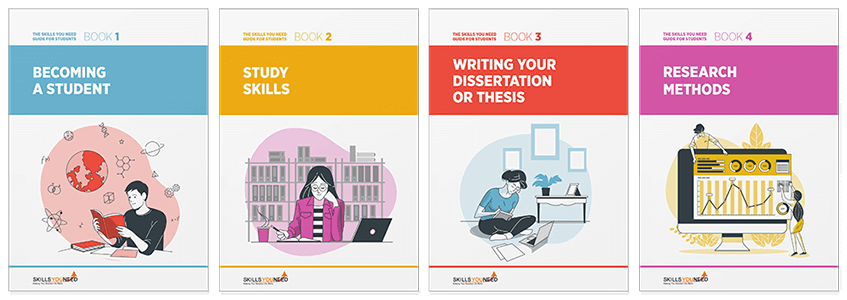
The Skills You Need Guide for Students

Develop the skills you need to make the most of your time as a student.
Our eBooks are ideal for students at all stages of education, school, college and university. They are full of easy-to-follow practical information that will help you to learn more effectively and get better grades.
Conclusion
Revising for exams and writing major essays can be incredibly stressful, particularly if you feel you are working against the clock. However, trying to force yourself to study in a way that contradicts your natural learning style will only amplify that stress.
By identifying yourself as an auditory learner and actively leaning into audio-first revision techniques—like text-to-speech tools, verbal debates, and voice-recorded active recall—you will study much more efficiently. Stop fighting your cognitive instincts and start using them to your advantage.
About the Author
The Student Housing Company is dedicated to supporting student well-being and academic success. By providing comfortable, vibrant, and highly supportive living environments in cities around the UK, they help university students build the foundation they need to excel in their studies.