


Assessing Leadership
See also:Leadership StylesMost professionals like to think of themselves as competent leaders. Whether you are managing a large remote team, seeking to impress the board of directors, or simply trying to guide a small project to completion, leadership qualities are constantly on display.
However, there is a profound difference between holding a leadership title and actually being an effective leader. Historically, evaluating a manager relied heavily on "gut feeling" or basic financial output. Today, the modern workplace demands a much more nuanced approach. To truly understand if someone is leading well, organizations must look beyond sheer charisma and assess the structural impact a leader has on their team's resilience, well-being, and long-term success.
No matter where you are on the corporate ladder, continuous assessment is the only way to evolve. Whether you are evaluating your own capabilities or reviewing the management team within your organization, here is how to accurately and objectively assess modern leadership.
Assessing the Leadership Mindset
Leadership begins with mindset. The most communicatively gifted, highly skilled individual will fail as a leader if they operate from a place of fear, micromanagement, or negative bias. Assessing mindset requires looking at how a leader responds to adversity.
Evaluating Emotional Intelligence
In today's complex business environment, emotional intelligence (EQ) is a far more accurate predictor of leadership success than technical expertise. To assess EQ, observe how the leader handles stressful situations. Do they lash out and assign blame when a project fails, or do they absorb the pressure, protect their team, and focus on collaborative problem-solving?
A highly effective way to measure this is through 360-degree feedback reviews. By anonymously surveying a leader's peers, direct reports, and superiors, you gain a panoramic view of their emotional regulation and empathy. If direct reports consistently state they feel unsupported or afraid to make mistakes, the leader's mindset requires immediate recalibration.
Measuring Adaptability
A rigid leader is a liability. You can assess a leader's mindset by reviewing their response to organizational change. When market conditions shift or new technologies (like AI) disrupt workflows, a strong leader pivots gracefully. They demonstrate a growth mindset, viewing challenges as learning opportunities rather than insurmountable threats.
Evaluating Core Leadership Skills
While mindset provides the foundation, a leader must possess the practical skills necessary to translate vision into reality. Assessing these skills involves looking at the clarity of their communication and their decisiveness.
Communication and Digital Empathy
Communication is no longer just about delivering rousing speeches in a boardroom. With the rise of hybrid and remote work, leaders must be assessed on their "digital empathy." Can they effectively communicate expectations over Slack or Microsoft Teams without sounding abrasive? Do they run inclusive virtual meetings where introverted team members are given the floor?
To assess communication skills, review the alignment between the leader's directives and the team's output. If a team frequently misses deadlines due to "misunderstandings" or conflicting priorities, the bottleneck is almost always the leader's inability to communicate with clarity and precision.
Decision-Making Under Uncertainty
Fear often manifests as chronic indecision. A true leader must be courageous enough to make difficult decisions even when they do not have 100% of the data. You can evaluate a leader's decision-making ability by tracking their "time-to-action" during a crisis. Do they procrastinate and wait for someone else to take the fall, or do they confidently choose a path forward and take accountability for the outcome? Assess how often they revisit and revise their decisions based on new evidence, as this demonstrates intellectual humility.
Measuring Team Impact and Culture
Ultimately, a leader is only as good as the team they build. The most objective way to assess leadership is to stop looking at the leader and start looking closely at their followers.
Psychological Safety and Innovation
Does the team innovate, or do they just follow orders? High-performing leaders create environments of high psychological safety—spaces where employees feel safe to voice dissenting opinions, pitch unconventional ideas, and admit mistakes without fear of retaliation. You can measure this by assessing the frequency of internal innovation. If a department never suggests new processes and merely maintains the status quo, the leader has likely stifled creativity through micromanagement.
Retention and Talent Development
It is a well-known corporate truth that people do not leave bad jobs; they leave bad managers. One of the most glaring metrics for assessing leadership is the staff retention rate. High turnover within a specific department is a massive red flag indicating a toxic leadership style.
Conversely, a great leader actively develops their team. Assess whether the leader delegates tasks effectively to build their employees' skills, or if they hoard high-profile work for themselves. A successful leader views their role as a mentor and can proudly point to individuals they have upskilled and promoted.
Further Reading from Skills You Need
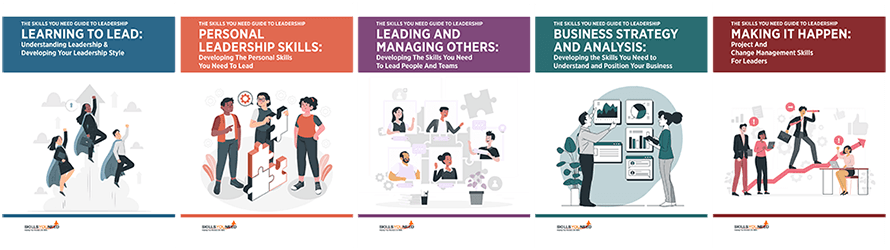
The Skills You Need Guide to Leadership eBooks
Learn more about the skills you need to be an effective leader.
Our eBooks are ideal for new and experienced leaders and are full of easy-to-follow practical information to help you to develop your leadership skills.
Conclusion: The Ultimate Assessment
To accurately assess leadership, organizations must move beyond subjective popularity contests and utilize concrete metrics: 360-degree feedback, retention rates, team autonomy, and the speed of decision-making. If you are assessing your own leadership, the most revealing question you can ask yourself is, "Why do I want to lead?"
If the answer is rooted in ego, status, or financial reward, your ceiling will be low. However, if your motivation is to remove obstacles for others, elevate your team's capabilities, and drive collective success, you already possess the most vital hallmark of exceptional leadership.
About the Author
Nick Smallman is an executive leadership coach and the founder of Working Voices. With over two decades of experience advising global organizations across New York, London, and Hong Kong, he specializes in strategic leadership development, interpersonal communication, and building high-performance workplace cultures. His insights on executive presence have been widely featured by the BBC and the Huffington Post.