

The Future of Education:
Skills for an AI-Centred World
See also: Understanding Large Language Models (LLMs)
With the rapidly changing digital landscape, the need for skilled professionals in emerging technologies like Artificial Intelligence (AI) has never been greater. This transformation is not just a business buzzword; it is a worldwide phenomenon that is fundamentally reshaping entire industries, and education is no exception.
As AI becomes more prevalent, the focus of education is beginning to shift. The simple memorisation of facts—a cornerstone of traditional learning—is becoming less valuable when the world's knowledge is instantly accessible. Instead, the emphasis is moving towards the irreplaceable human skills that are necessary to use this new technology effectively and responsibly.
This article will explore the rise of AI-centred education, not as a report on specific policies, but as a guide to the essential skills that learners, educators, and parents must cultivate to succeed in this new, rapidly changing world.
How AI is Changing the Learning Landscape
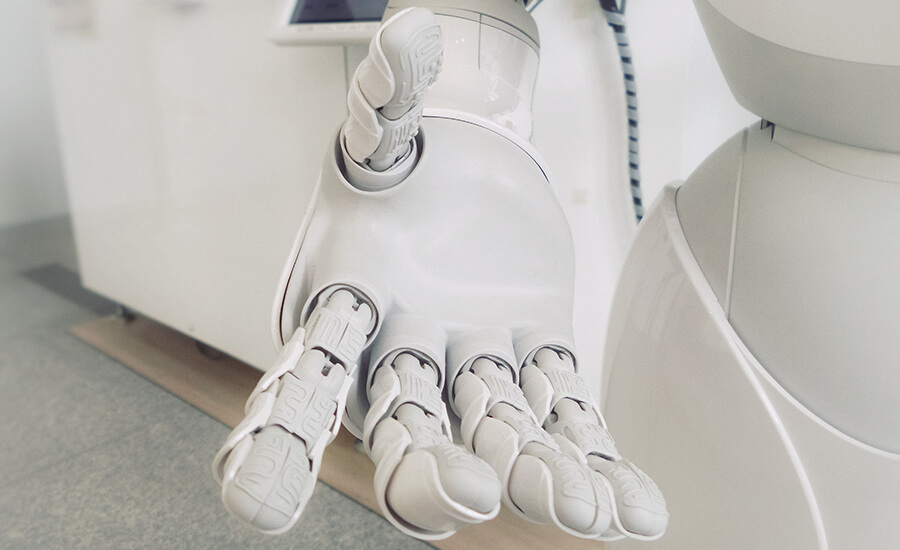
AI-centred education refers to the integration of artificial intelligence tools and methodologies into the learning process. This is about more than just using new software; it represents a fundamental change in how we acquire and apply knowledge. The goal is not to replace human educators, but to augment their abilities and provide learners with more powerful tools.
Key applications in this new landscape include:
Personalised Learning Paths: AI can adapt to a student's individual pace and learning style. It can identify where a learner is struggling and provide targeted exercises, or accelerate the content for those who grasp a concept quickly. This moves away from a one-size-fits-all model to a truly bespoke educational experience.
AI as a "Co-pilot": Modern AI tools, like large language models, can act as powerful assistants. They can help a learner brainstorm ideas, draft a first pass of a written piece, explain complex topics in simple terms, or act as a 24/7 tutor for practising a new language or skill.
Automation of Administrative Tasks: For educators, AI can automate time-consuming tasks like grading multiple-choice questions or managing schedules. This frees up the teacher's valuable time to focus on more interactive, creative, and collaborative teaching methods.
Essential Skills for the Modern Learner
As technology takes on more of the "what" (the facts), human learners must focus on the "so what" (the context, application, and creation). The following skills are becoming the most valuable assets in an AI-centred world.
-
Critical Thinking and AI Literacy
This is arguably the most important skill of the 21st century. AI tools are not infallible; they can be wrong, misinterpret requests, and even "hallucinate" (present false information as fact). The modern learner must be able to evaluate the information they receive with a critical eye.
Critical thinking in the age of AI means moving from being a "consumer" of answers to being a "curator" of information. It involves:
Questioning the Output: Never accepting an AI's answer at face value. A skilled learner asks, "Is this information accurate? Is it complete? Is it biased?"
Fact-Checking: The ability to cross-reference an AI's answer with reliable, independent sources is crucial. This is a core component of assessing information effectively.
Prompt Engineering: Knowing how to ask the right question is a skill in itself. A vague question will get a vague answer. A skilled learner knows how to craft detailed and specific prompts to get the high-quality, nuanced information they need.
-
Adaptability and Lifelong Learning
The AI tools that are popular today will likely be obsolete or unrecognisable in five years. The technology is evolving at a breakneck pace. Therefore, the skill to cultivate is not the mastery of one specific program, but the mastery of learning itself.
Lifelong learning is the ability to adapt, unlearn, and relearn continuously. An adaptable learner is one who is curious, open to change, and not afraid to be a beginner again. This is a mindset that embraces new tools and techniques as they emerge, rather than resisting them or clinging to outdated methods. This skill ensures that your value in the workplace is not tied to a single piece of software, but to your ability to grow.
-
Creativity and Problem-Solving
AI is excellent at synthesising, summarising, and executing tasks based on existing data. However, it struggles with true originality and human creativity. The future of innovation lies in the partnership between human creativity and AI's processing power.
A modern learner should leverage AI as a brainstorming partner. For example, you can ask an AI to "generate 20 ideas for a new marketing campaign for a sustainable product." The AI will provide a solid list, but it will be the human's creative skill to spot the one unique, compelling idea, combine two different concepts, or find the emotional spark that will truly connect with an audience. AI can generate options, but humans provide the vision, taste, and original insight needed for true problem-solving.
Similarly, when students face complex word-based math questions, a word problem solver can help analyse the problem and outline the steps to reach a solution. It supports learning by guiding students through the reasoning process.
-
Digital Citizenship and Ethics
Powerful tools come with new responsibilities. An AI-centred education must include a strong focus on digital citizenship and ethics. A skilled learner needs to understand the implications of the technology they are using. This includes:
Understanding Bias: Recognising that AI tools are trained on human-generated data and can inherit and even amplify human biases related to race, gender, and culture.
Data Privacy: Knowing what information is appropriate to share with an AI and understanding how that data might be used or stored.
Intellectual Property: Navigating the complex new questions around plagiarism and ownership. If an AI helps you write an essay, who is the author? A responsible learner knows how to use AI as an aid while ensuring their final work is authentically their own.
The Evolving Role: Essential Skills for the Modern Educator
As AI-centred education becomes the norm, the role of the educator—whether a teacher, a corporate trainer, or a parent—is also transforming. Their value is shifting away from being the primary source of information and towards being a facilitator of learning.
-
The Shift from Lecturer to Facilitator
When students can get the "what" (facts, definitions, summaries) from an AI, the educator's job becomes to teach the "so what" and the "now what" (context, application, and wisdom). A modern educator is a guide, a coach, and a mentor. Their skills are focused on:
Facilitation: Leading discussions that challenge students to think critically about the information they have gathered from AI.
Coaching: Providing personalised guidance, encouragement, and support to help learners navigate their personalised learning paths.
Collaboration: Designing and managing group projects where students can apply their knowledge in a practical, collaborative setting.
-
The Skill of Responsible Integration
Simply banning AI tools in the classroom is an ineffective, short-term strategy. The modern educator must develop the skill of integrating these tools into the curriculum in a way that is both responsible and pedagogically sound. For example, instead of asking for a simple summary of a historical event, an educator might ask students to use an AI to gather data and then write a persuasive essay, requiring them to cite their sources and add their own original analysis. This teaches students how to use the tool as a professional would—as a research assistant, not a replacement for their own brain.
Conclusion
It is clear that Europe and the rest of the world are moving towards an AI-centred education, and this presents both challenges and incredible opportunities. The future of learning will not be a battle of humans versus machines, but a partnership between human intelligence and artificial intelligence.
By embracing this shift and focusing on the irreplaceable human skills—critical thinking, adaptability, creativity, and ethical responsibility—we can prepare the next generation. We can ensure that AI becomes a powerful tool that augments our potential and helps us to solve some of society's most pressing problems, creating a new era of personalised and effective learning for all.
About the Author
Craig Lebrau is a writer and marketing professional with a keen interest in how emerging technologies are shaping the future of education and brand communication in the digital era.