


It's Never Too Late to Acquire an Education
See also: What is Learning?We often tell young people that they can become whatever they want when they grow up, yet as adults, we frequently fail to apply that same limitless philosophy to ourselves. The psychological barrier of age convinces many capable individuals that their educational window has permanently closed.
Perhaps you are in your thirties and regret never finishing your college degree. You might be in mid-life, feeling trapped in a career path that offers little upward mobility, or perhaps you have reached retirement and are finally looking to master a complex subject you never had time for during your working years.
It is time to discard the narrative that learning is exclusively for the young. The modern educational landscape has shifted dramatically, completely decentralizing how, where, and when we acquire knowledge. No matter what stage of life you are currently navigating, it is entirely possible to return to education and successfully pivot your personal or professional trajectory.

The Strategic Importance of Ongoing Education
The most compelling argument for embracing lifelong learning is the rapid, relentless evolution of the global economy. Industries change overnight, and the technical proficiencies that guaranteed employment a decade ago are often obsolete today. To maintain your professional relevance and command a competitive salary, you must commit to continuous skill acquisition.
However, the benefits of returning to education extend far beyond the purely financial. Education is a profound tool for personal reinvention. Engaging with complex, unfamiliar material forces your brain to build new neural pathways, keeping you cognitively sharp. For older adults, returning to a structured learning environment can be an incredibly effective method for building new social networks, establishing a daily routine, and combating the pervasive issue of loneliness.
Whether you are pursuing a full postgraduate degree, enrolling in an intensive technical bootcamp, or simply taking asynchronous community courses, engaging with education later in life yields numerous structural benefits. You will naturally enhance your personal development, build resilience against sudden economic shifts, and fundamentally improve your ability to engage in complex critical thinking. Education systematically dismantles our outdated beliefs, forcing us to grow into more adaptable, well-rounded individuals.
How Do You Jump Back In After Years Away?
The transition from high school directly into university is heavily heavily guided by counselors and parents. When you attempt to return to education ten, twenty, or thirty years later, you are entirely self-directed. The task can feel overwhelming, especially when you must balance coursework with a full-time job, a mortgage, and family obligations.
Success requires treating your return to education as a strategic project. By breaking the process down into actionable, sequential phases, you can bypass the overwhelm and build a sustainable learning routine.
Assess Your Current Position and Ultimate Objectives
Before you spend money on tuition or textbooks, you must clearly define your underlying motivation. Are you seeking a specific credential to trigger a promotion at your current company? Are you trying to orchestrate a complete industry pivot? Or are you learning purely for intellectual stimulation?
Once your macro objective is established, conduct a ruthless inventory of your current competencies. Identify the exact gap between the skills you have today and the skills required to reach your goal. Writing this down creates a tangible roadmap. If you are aiming for a management role, you might realize you do not need another four-year degree, but rather a targeted six-month certificate in project management and organizational leadership.
Make a Granular Strategic Plan
With your educational gaps identified, you must now audit your available resources. Education requires two primary currencies: time and capital. You must be deeply realistic about how much of both you can afford to invest without destabilizing your current life.
Examine your weekly schedule to find hidden pockets of time. Can you study for an hour before the rest of your household wakes up? Can you listen to academic lectures during your daily commute? Planning your study schedule in advance prevents academic responsibilities from bleeding into your personal life. Furthermore, research scholarships, employer-sponsored tuition reimbursement programs, and adult-learner grants to mitigate the financial friction of returning to school.
Consider Your Varied Educational Options
Adult learners no longer have to quit their jobs to sit in physical lecture halls. You must evaluate which delivery method best aligns with your learning style and logistical constraints.
Asynchronous online learning offers unparalleled flexibility. You can consume lectures and complete assignments entirely on your own schedule. This is often powered by intuitive LMS software that centralizes all your syllabi, readings, and grading rubrics into a single dashboard, removing administrative friction. Online courses are generally more cost-effective and eliminate commuting time.
Conversely, traditional synchronous education (whether online or in-person) requires you to be present at specific times. While more rigid, this structure is highly beneficial for tactile or auditory learners who thrive on real-time debate, immediate instructor feedback, and the accountability of a cohort. Many modern institutions offer hybrid models, allowing you to blend the flexibility of digital learning with the networking benefits of in-person seminars.
Cultivate the Right Mindset and Banish Imposter Syndrome
One of the greatest hurdles adult learners face is imposter syndrome—the nagging feeling that you are too old to be in the classroom and that you simply cannot keep up with younger students. You must actively rewrite this internal narrative.
Adults actually make exceptional students. You are not pursuing an education because society expects you to; you are there because you have a distinct purpose and intrinsic motivation. You bring decades of rich, practical life experience to academic discussions, allowing you to contextualize theoretical concepts in ways that younger students simply cannot. When you encounter a difficult assignment or fail an initial exam, do not view it as proof that you are too old to learn. Treat it as standard academic friction. Resilience, combined with your mature work ethic, will be your greatest asset on this journey.
Conclusion
It is a profound misconception that education is a finite phase of early life. Acquiring new knowledge, mastering modern skills, and challenging your own intellectual boundaries is a lifelong endeavor. While returning to education as an adult presents unique logistical challenges, the personal empowerment and professional leverage it provides are immeasurable.
By taking the time to audit your current skills, strictly managing your schedule, selecting the right digital or traditional learning platform, and leveraging your mature life experience, you can seamlessly integrate education back into your routine. The willingness to learn is an active choice. If you are dissatisfied with your current trajectory, make the choice to change it today.
Further Reading from Skills You Need
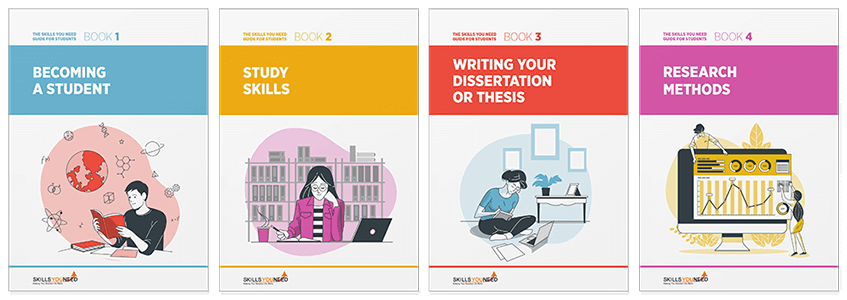
The Skills You Need Guide for Students

Develop the skills you need to make the most of your time as a student.
Our eBooks are ideal for students at all stages of education, school, college and university. They are full of easy-to-follow practical information that will help you to learn more effectively and get better grades.
About the Author
Jill Phillips is an experienced adult education advocate and career transition coach based in Buffalo, NY. She specializes in helping non-traditional students navigate the complexities of returning to school, leveraging modern digital learning tools to help adults upskill and pivot confidently into new professional chapters.